In Photos
By Danielle Grillo | Photoreporter
In an era defined by instant communication, the digital world has revolutionized the way we connect with one another. With just a tap on a smartphone or a click of a computer, individuals can reach loved ones across the globe or send messages in seconds to colleagues, friends, or even strangers. Yet, as these virtual interactions become more evolved and embedded in our daily lives, a pressing question has emerged:
Has our growing reliance on digital communication come at the cost of having meaningful face-to-face connections?
According to a survey conducted by the Pew Research Center in 2022, in Italy about 93 percent of people report using the Internet daily, and of that 87 percent report owning a smartphone. This data on smartphone ownership mirrors global trends, highlighting Italy’s swift embrace of the digital age and its increasing reliance on mobile technology for daily activities.
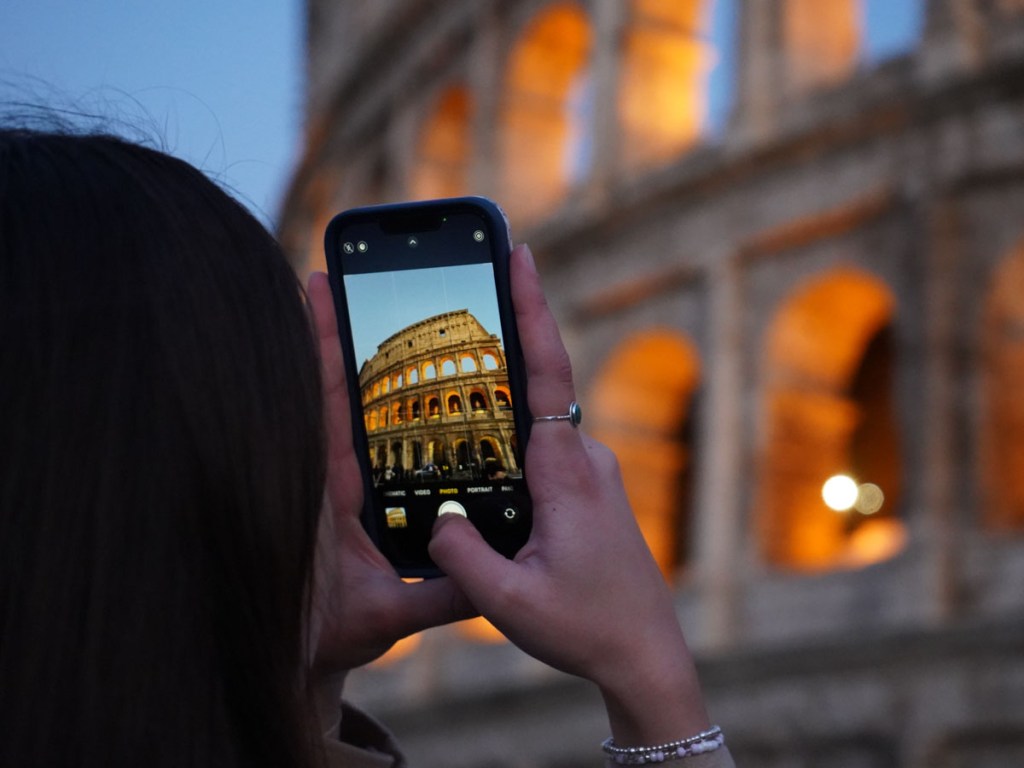
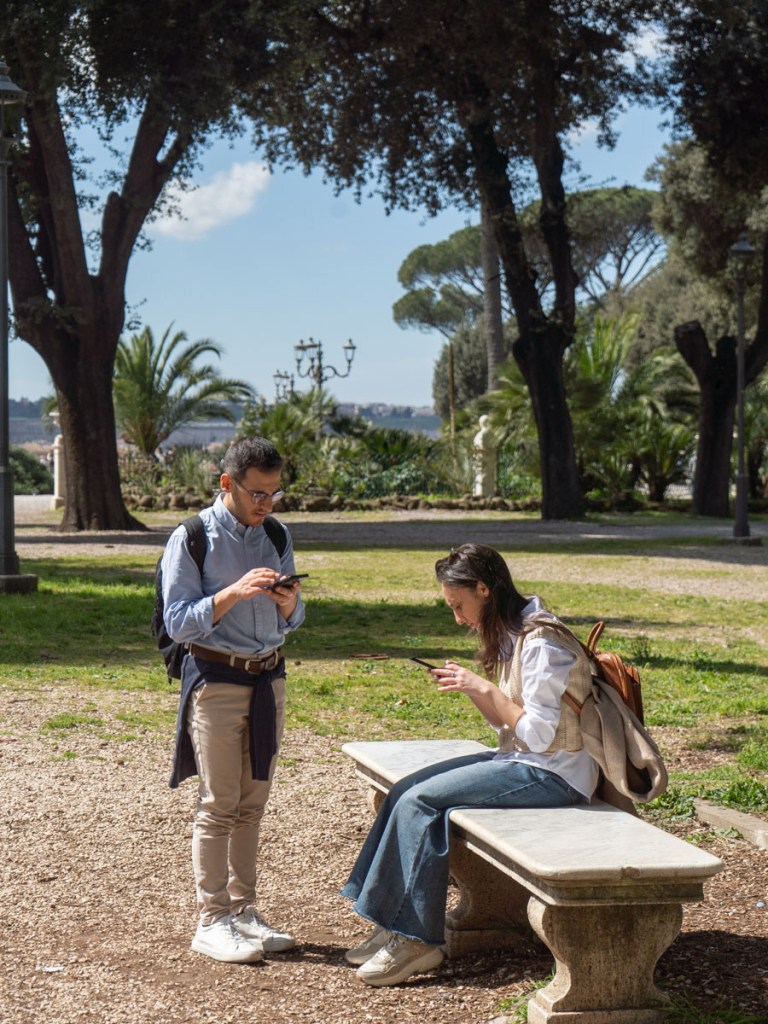
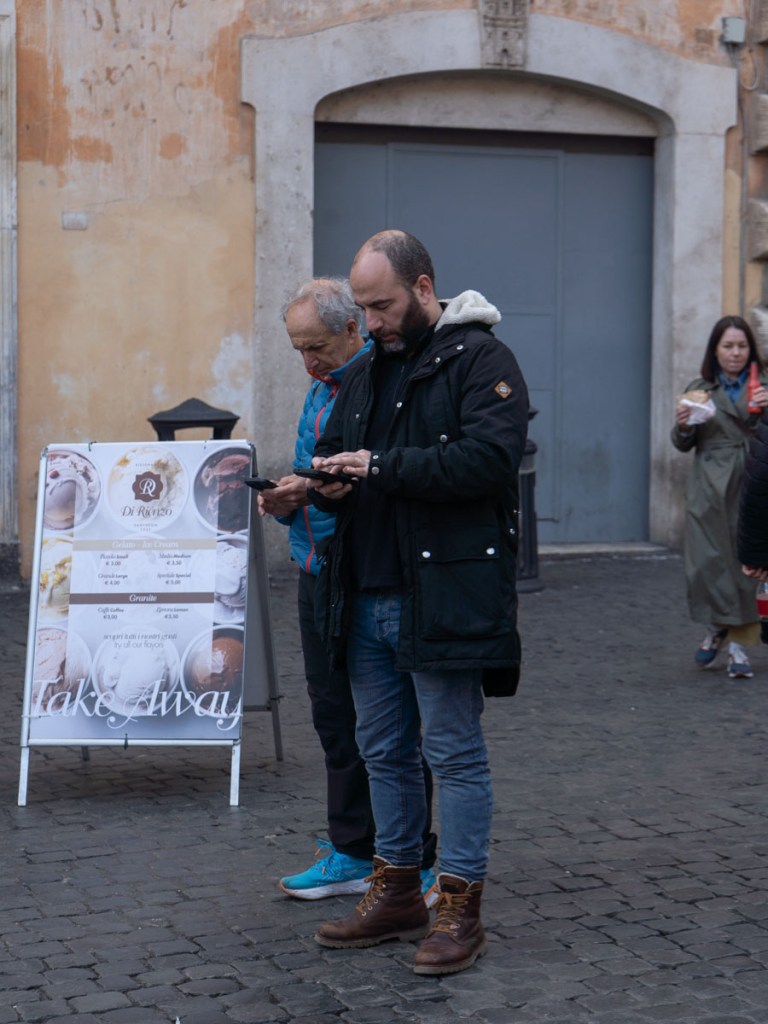
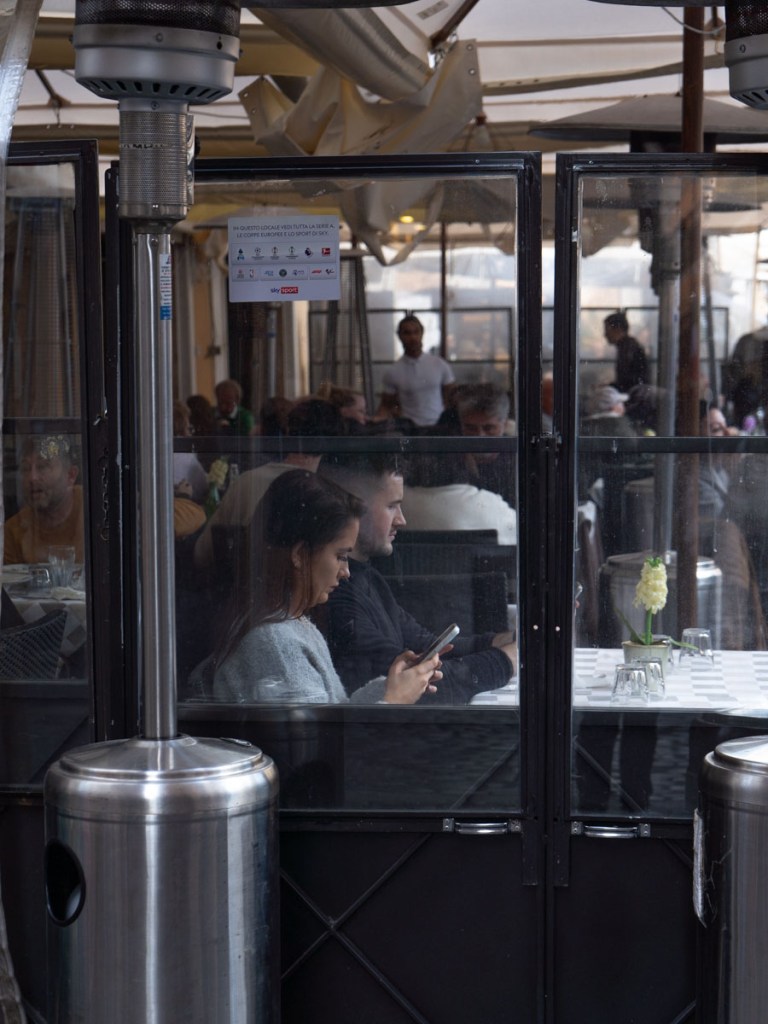
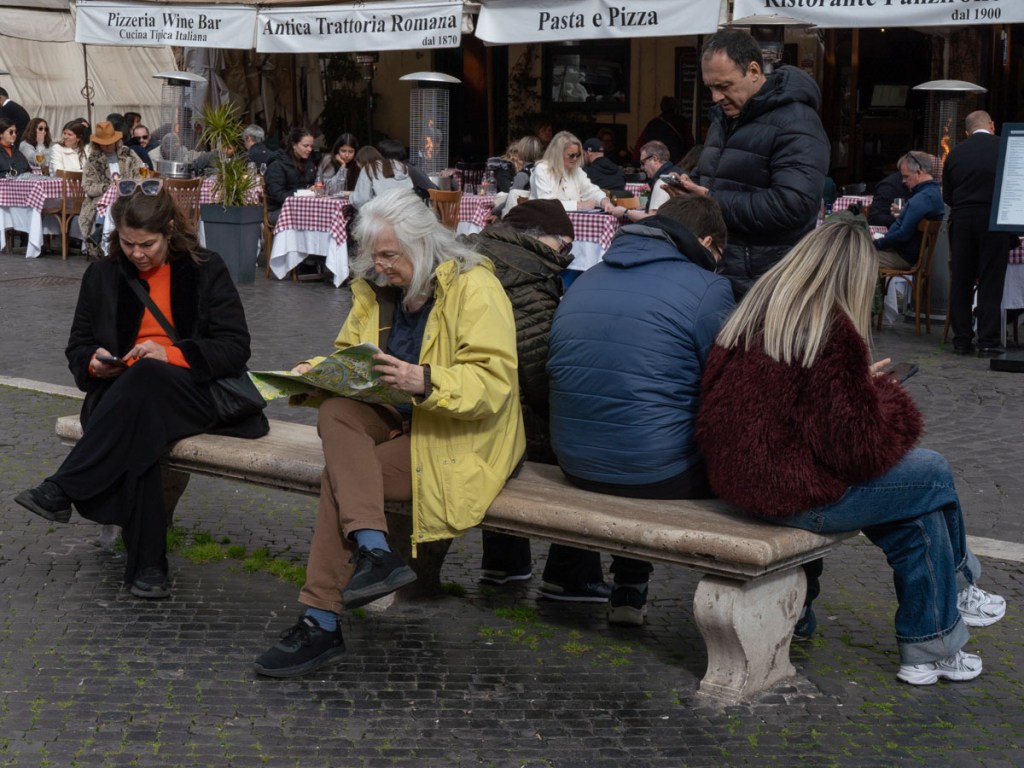
Whether spending an afternoon by the Trevi Fountain or an evening near the Colosseum, visitors from all over the world flock to Rome’s iconic attractions. However, they all share one common behavior: their eyes are fixed on their screens. This digital attachment extends beyond sightseeing, continuing during meals or while commuting around the city, as many use their phones as a tool to pass the time rather than engaging in meaningful face-to-face conversations. Throughout the winter and early spring season in Rome, these patterns were observed by the reporter, further echoing the concerns raised by researchers in Italy.
Additionally, the use of social media platforms—such as Facebook, X (formerly Twitter), and Instagram—has transformed how we stay connected, allowing us to keep up with others’ lives in real time. However, this shift often encourages users to focus more on curating the “perfect” image rather than being fully present in their actual experiences.
In 2024, Medicover Hospitals—a multinational healthcare provider based across Europe—published an article examining the health effects of excessive screen time in today’s digital age. The report highlighted both physical and mental risks, noting that prolonged screen use can contribute to increased anxiety and depression. The Medicover team warned that “more screen time means less time with friends and family, which can lead to feelings of loneliness, isolation, and lack of connection.”
As we continue to navigate an increasingly digital world, the challenge lies in finding a balance. While technology undeniably enhances our ability to communicate across distances and helps facilitate daily tasks, it is crucial to recognize the potential it has to diminish our personal connections and face-to-face interaction as well.