
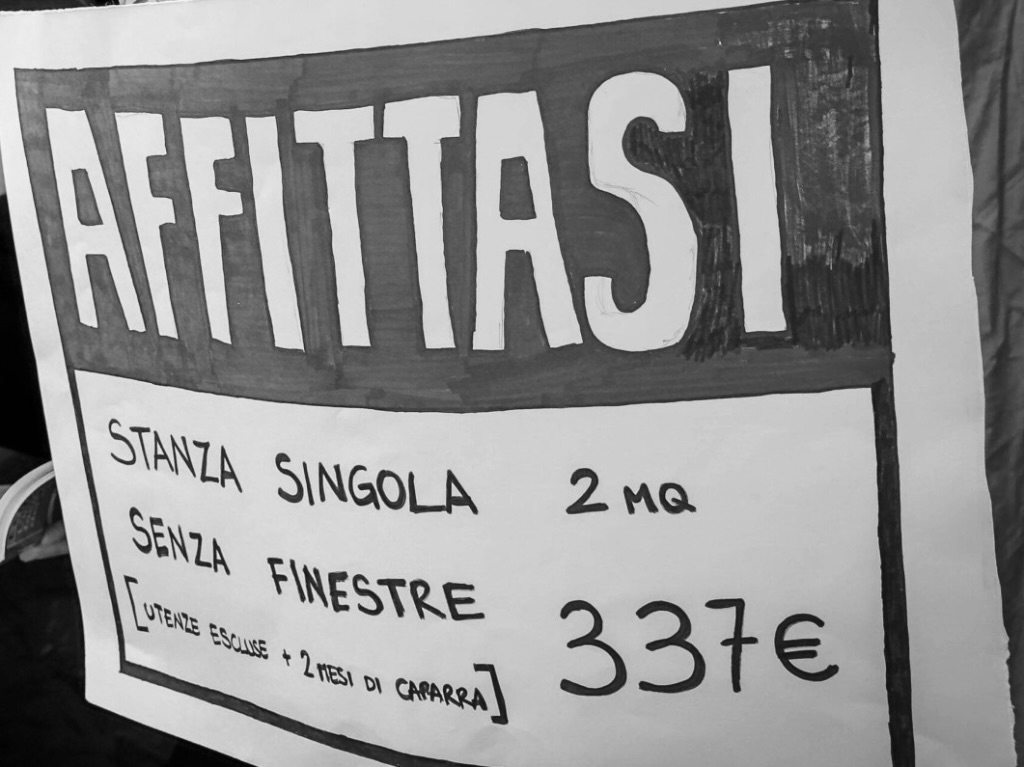
A year after protests, students look for alternative housing and accommodation farther away from campuses to save in rent. With the upcoming Jubilee impact, Student Government collects feedback from students and JCU Housing contracts extra beds.
By Alessandra Rizzo | Newsreporter
University students in Rome struggle to find accommodation due to rising prices and scarcity of affordable rooms and apartments. As Rome prepares to welcome close to 30 millions of tourists and pilgrims for the 2025 Jubilee, property owners are choosing short-term leases for Airbnb tourism over longer and more reasonable contracts for students.
With the high rents of university residences and of housing in Trastevere and nearby neighborhoods like Monteverde, the growing trend is for students to stay in temporary accommodations like convents and hotels or farther away from campuses to save money on rent.
According to a poll by Italy’s National Union of University Students, Rome is one of the cities where students struggle the most to find accommodation, with 53% of respondents saying costs in Rome are excessive and unaffordable.
“I chose the convent as an alternative to university housing due to the very high prices,” said Benedetta Boccagna, JCU Marketing student.
She also searched for a house with a friend in the Trastevere and Monteverde area to stay closer to JCU campuses.
“We found nothing between high prices, few offers, and many houses converted into B&Bs for the Jubilee,” said Boccanga. As a result, this semester her and her friend decided to stay in the Santa Rufina Convent behind the Frohring Campus.
A three-room apartment in Trastevere can cost 5,000 euros per month while a single room goes from 500 to 2,000 euros per month according to posts on real estate websites.
House prices in Rome increased by 0.8 percent from July through September. Of the 27 districts monitored, 22 reported price increases, according to the real estate portal, idealista.it.
SG Government Housing Surveys
The JCU Student Government (SG) conducted two main housing surveys this year to obtain more feedback from students about the housing issues they are facing with the upcoming Jubilee event.
The spring survey shows that more than 90% of respondents planned not to return to JCU dormitories, preferring to find accommodation elsewhere due to increased rental expenses at the university.
JCU rents are paid for approximately one semester. An undergraduate student can pay between 3,000 and 6,000 euros per semester, depending on which residence they choose to stay in and whether they rent a single or shared room.
President Sebastian Terrazas and Vice President Harman Singh said they were led to conduct this research after the growing conversations and interaction with impacted students talking about high rents and even from their personal experience.
“Part of the reason we’re conducting this survey was to make sure that the university would know roughly how many people might want to move,” Terrazas said.
SG communicated this data to the university authorities, who requested another survey to get further feedback from students’ accommodation experience during the academic year.
At the beginning of this fall, SG surveyed students for the second time on the three JCU campuses, this time in person, and asked about their experiences with renting accommodations on campus.
The survey revealed that while 33.3 percent of students indicated they might consider staying in JCU residences, 66.7 percent expressed no interest in living at university housing for different reasons.
A few students said for this news report that they are looking for something less expensive or want more independence.
“The student government is working to address the housing issue, but it is a complex problem that requires a multifaceted approach,” Singh said.
JCU’s VP for Strategic Initiatives and Operations, Dr. Jose B. Alvarez, said that the university is aware of the situation and is taking steps to address the issue.
According to VP Alvarez, the university is already working on finding a solution to help students who could be struggling with finding accommodation. He said he encourages students to apply for housing in case of need.
“We still contracted more beds than we needed, so if students come to us at the beginning of [next] semester, we should have beds to accommodate them,” said Alvarez.
Rome is one of Airbnb’s most prominent markets in Europe, with a particularly high density of short-term rental properties. According to data from Inside Airbnb and other studies, the city has over 39,000 active Airbnb listings. Short-term tourist rentals of six to seven nights per month are sufficient to generate the equivalent of regular monthly rent.
While students in Rome continue to look for affordable ways to live and study in the capital, initiatives like Dot Campus have been formed in the last few years claiming to provide students and young workers who are out of town with a more affordable alternative to expensive apartments in major university areas.
“I chose to stay in a facility like DotCampus for comfort and convenience,” said Vito Vasile, JCU degree-seeking student.
The monthly rent at this location includes services and bills already, which would correspond to the monthly expenses she would have renting an independent room plus electricity, water and gas bills.
Social student organization Cambiare Rotta has been protesting since September 2023 to highlight the difficulties that university students are forced to face.
After the protests in Milan, Cambiare Rotta has spread throughout Italy, reaching cities such as Bologna, Pisa, and Rome where students have been organizing riots and meetings.
In Rome, the effort of the student organization, ARCISPARWASSER comes in response to recent reports of students being evicted from their accommodation on short notice. This situation is unfolding across Rome and involves students from universities throughout the city. “Rome is not a hotel,” is part of their campaign motto.
Roma Tre University student, Alessandro Personè, says he has been living in this discomfort since his house owner informed him and his roommate that the new contract would only be extended until April, as he had decided to convert the house into a B&B.
Alessandro said he hopes to secure accommodation soon, fearing it will become nearly impossible with the Jubilee crowds in January. A €2,500 euro room in San Lorenzo reflects the unsustainable housing issues in an already struggling city he says.
Personè, also said he feels unprotected due to the lack of specific political regulations addressing market changes.
“For me, there is a problem of access to the city, housing and the right to live in a place regardless of their income,” said Alessandro. “I think the issue is that certain policies must be in place to regulate it. It would be wonderful if someone could stand in solidarity with us, resist this process, and give up their privilege for the greater good.”
Learn More
Renters in Rome struggle as coming Holy Year dries up housing market | Reuters
‘Totally unsustainable’: Italian students protest over cost of housing | Italy | The Guardian
Pope Francis Calls for Concrete Action to Address Housing Crisis in Rome | Il Messaggero
Gli affitti impossibili di Milano: storie di chi fugge e di chi resiste
Italy Tightens Rental Booking Rules for Tourists | Schengen News
 thematthewrome.com