
In Photos
By Cristina Zekert | Photoreporter
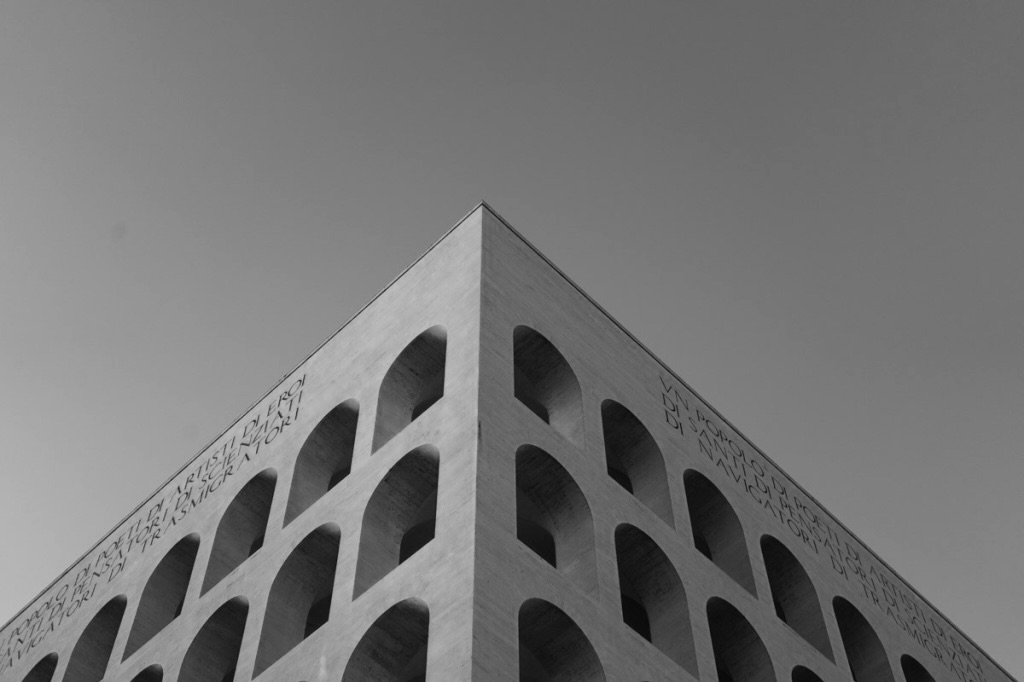
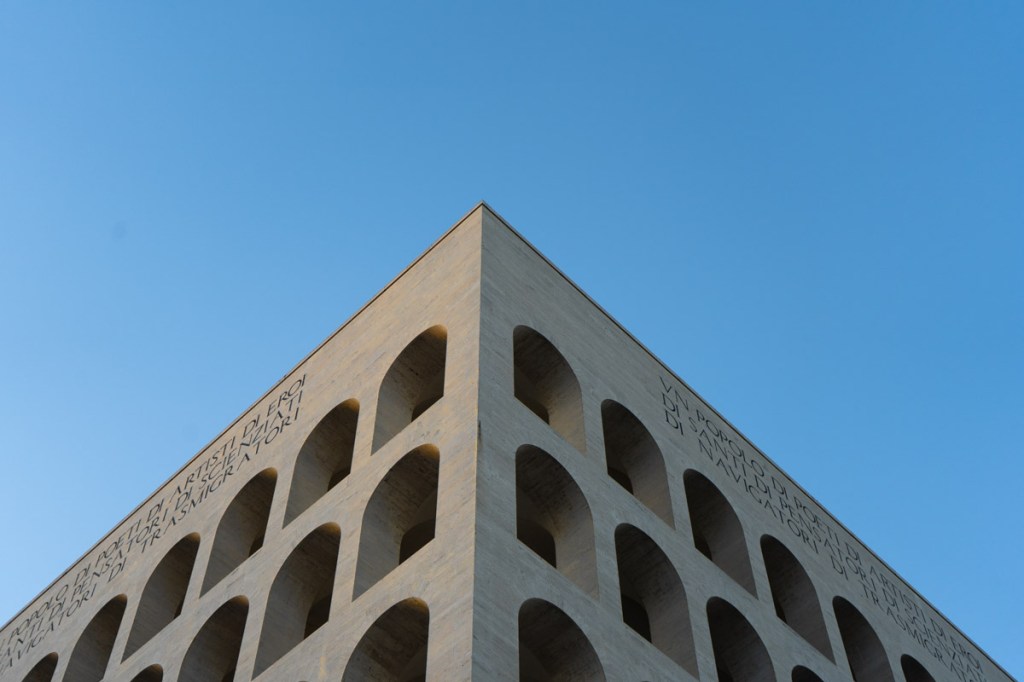
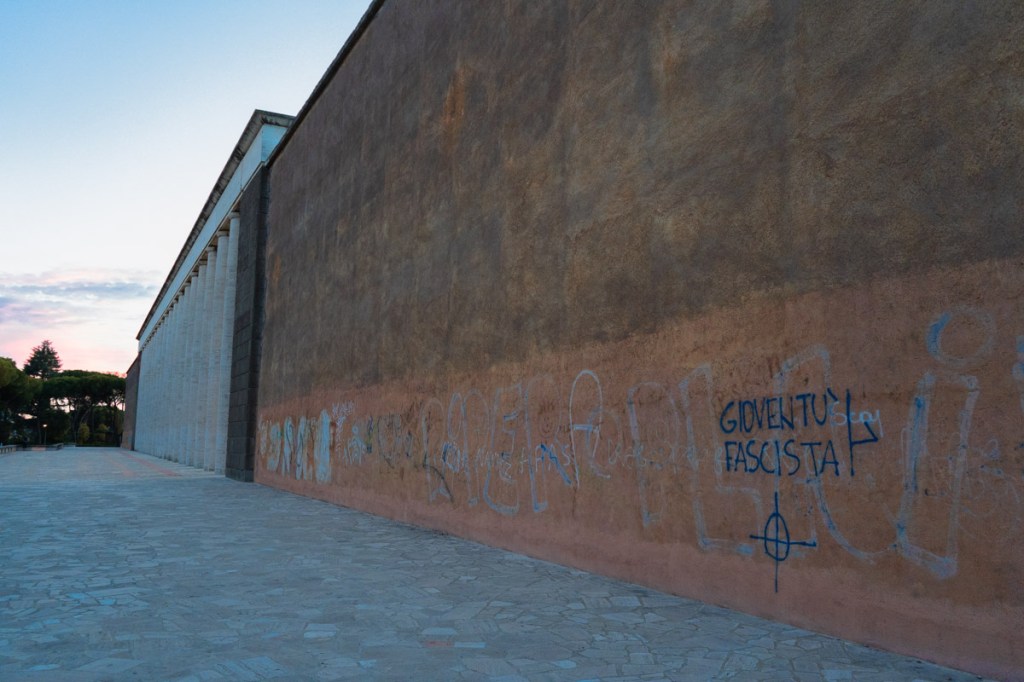
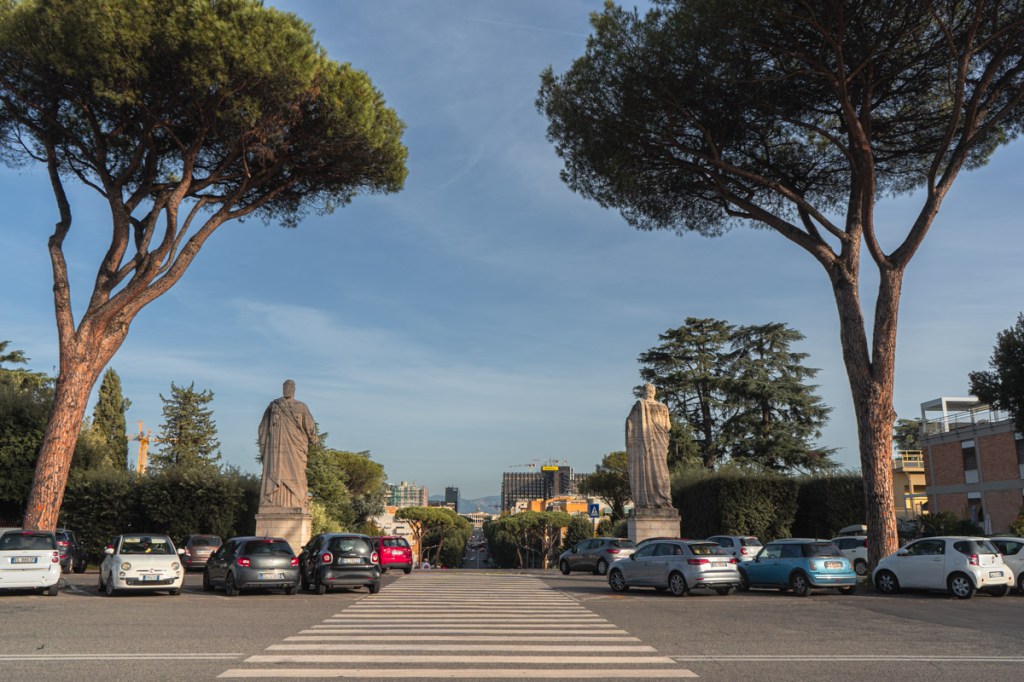
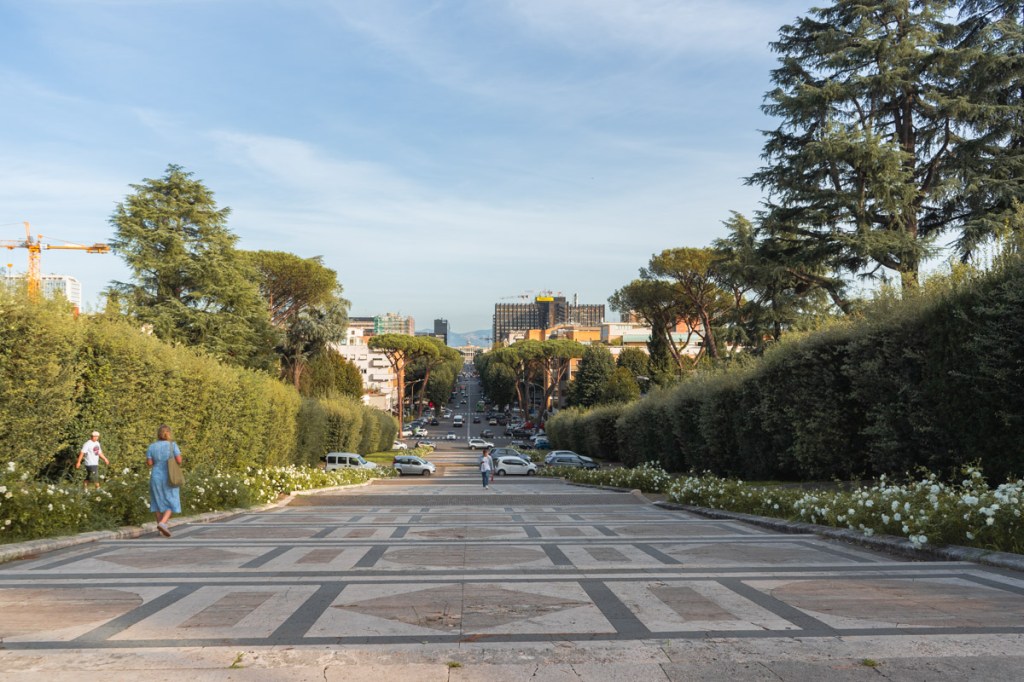
Given the current political right-wing climate in Italy and considering that Fratelli D’Italia won the 2022 national elections, there is the question of whether fascist-era architecture plays a role in nurturing, reviving or creating nostalgia for that time. The neighborhood of E.U.R. (Esposizione Universale Roma) in southern Rome, built in 1937 during the Italian fascist era under Benito Mussolini, can be an example of this.
According to publicly available demographic information, residents of E.U.R are generally economically affluent. Stereotypically, affluency can be related right-leaning political ideologies and tendencies.
“Places have a soul, our soul is modelled by where we live,” said Silvio B., 45.
The intention behind building E.U.R was to demonstrate “the genius of Italian civility,” with architecture stylistically reminiscent of the Ancient Roman Empire, according to the E.U.R. S.p.A website.
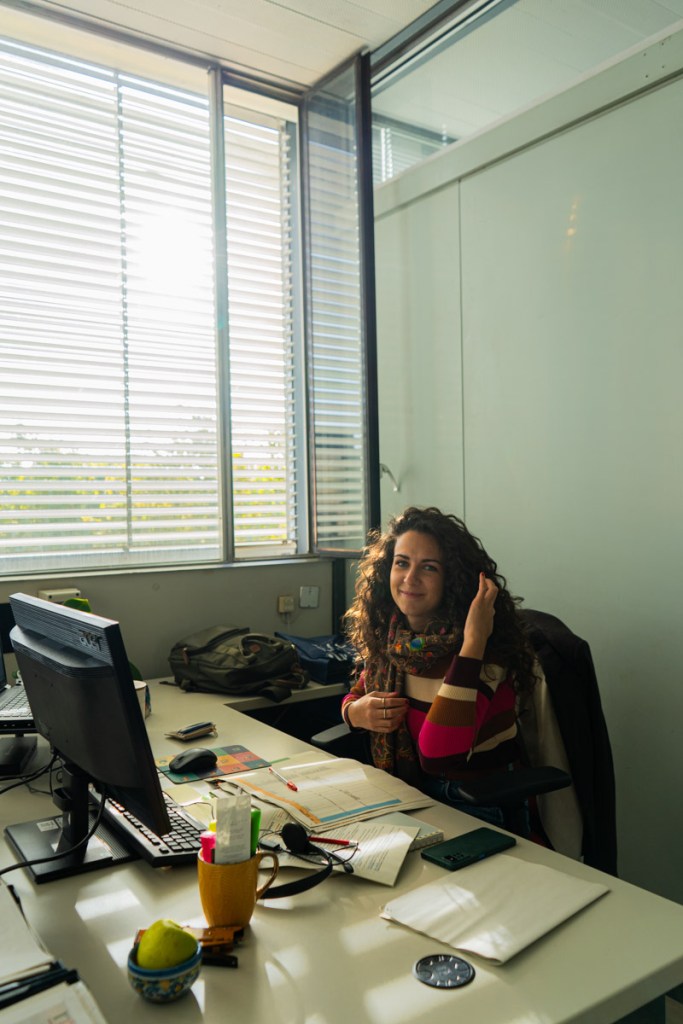
“I find E.U.R cold and unwelcoming. It represents an unpleasant time,” said Stefania B., 33, a public employee of a trade agency in E.U.R.
“E.U.R is, I believe, more financially than intellectually developed, and not designed to be lived in,” said Patrizia F., 60.
Research on how identities may be shaped by lingering messages within historical architecture has also been explored by the KTH Royal Institute of Technology in Stockholm, Sweden.
“There is certainly an influence of this strong architecture on people’s ideologies. Education is fundamental in separating fascist architectural connotations from personal ideology. But I don’t think everybody in E.U.R does this,” said Stefania B., 33.
The exploration of such a correlation in the Italian context can provide useful insight into the future of Italy’s political climate.
“E.U.R has a strong historical significance, and there is widespread comprehension of its fascist roots,” said Patrizia F. “E.U.R is, I believe, more financially than intellectually developed, and not designed to be lived in.”
Considering people’s individual experiences in E.U.R can further depict the increasing right-wing Italian political affiliations.
“My daughter went to school and currently works at E.U.R. She has recently developed a more right-leaning political ideology, which contrasts to my own,” says Tiziana A., 60.
The E.U.R population provides useful insights regarding the relationship between political connotations in architecture and individuals’ political beliefs. Therefore, this raises awareness for the potential role of historically charged architecture on the rise or perpetuation of corresponding ideologies.
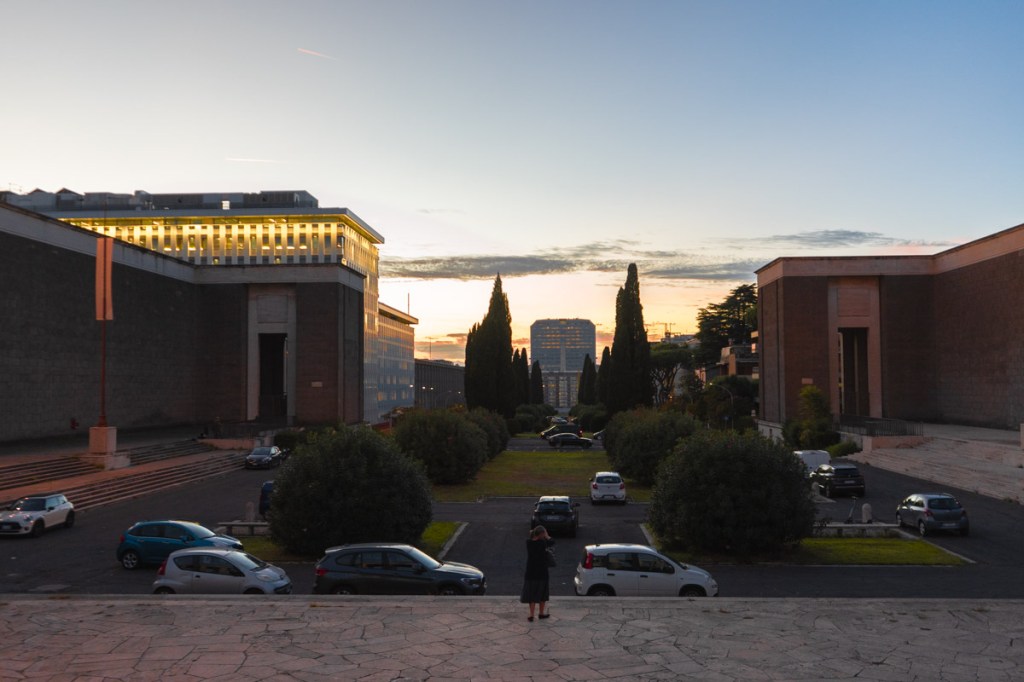

mark the walls of an elementary school in Rome, Italy.
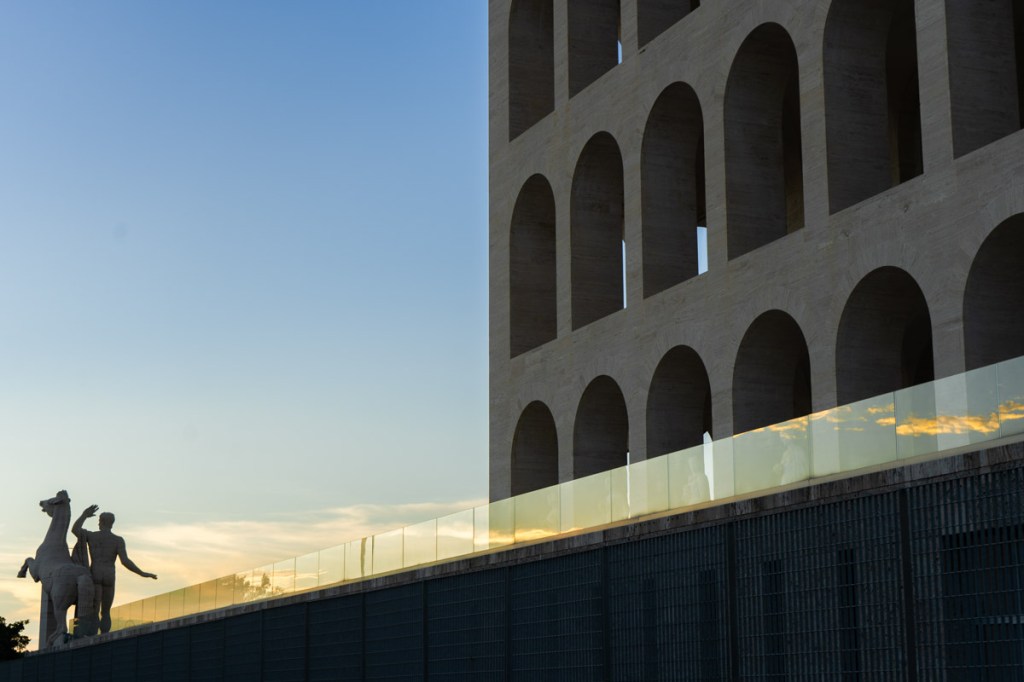

in her workspace in Rome, Italy.



 thematthewrome.com