

News
By Francesca Motta | Newsreporter
A rise in student applications for the new Gender-Inclusive Housing (GIH) option prompted JCU Housing to accommodate 17 students this fall. Introduced in Summer I, this initiative makes John Cabot the third university in Rome to offer this type of student housing.
Led by Assistant Dean for Residential Life Rebekah Sagredo and Housing Administration Coordinator Janet Menasci, the GIH option is designed to provide a welcoming and inclusive living space for undergraduate students seeking housing outside the gender binary.
“The university is a place that cannot remain the same forever, certain things must evolve,” said Menasci.
In its first semester, the program accommodated four residents in one apartment. The demand remained consistent through Summer II and rose this fall to 17 students housed across four apartments.
Gender-inclusive housing is available this fall across JCU’s main residences, including Gianicolo, Lungara, and Trastevere apartments. The program focuses on creating shared living environments.
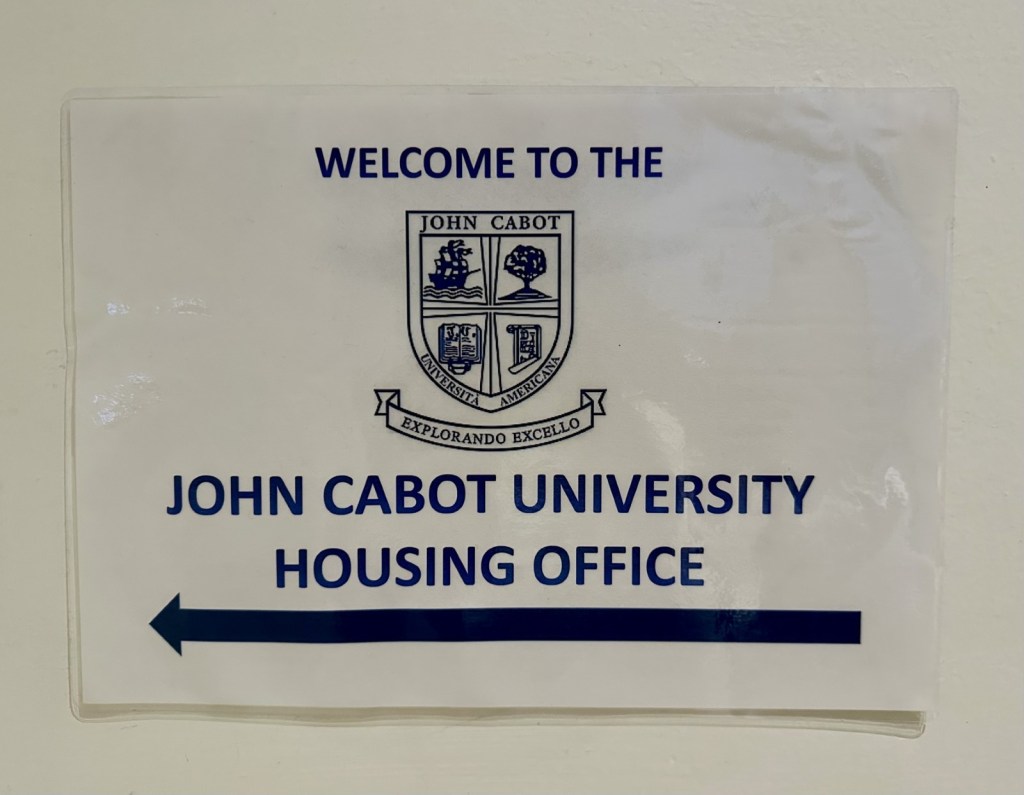
Image Credit: Francesca Motta.
“Our aim is for students to feel part of the community, to connect, share experiences, and make new friends wherever they are,” said Sagredo.
Menasci said it is important that everyone feels part of the environment they are creating together.
“Gender inclusive housing is a very good thing,” said Elliot Cleek, a first-year student living in the Trastevere GIH. “I think it helps a lot of people who don’t identify as either gender to feel more secure in their identity.”
GIH is available to undergraduate students over 18 and requires completing a designated form through the JCU Student Portal. Those who do not apply are automatically assigned same-gender housing. Applications must meet semester deadlines, as late submissions are not accepted by the Housing Office. For Spring 2025, the application deadline was Nov. 1.
To protect students’ privacy, parents or guardians are not notified of their participation.
“We respect students’ privacy, but we really hope and wish that students are honest with their families and let them know that this is the type of housing option they want,” said Sagredo.
The Queer Alliance ensured the GIH initiative met the needs of diverse students without discrimination.
“We wanted to make sure it wasn’t going to be trans-exclusionary,” said Lucas Whitaker, President of the Queer Alliance for the 2023-2024 academic year.
The Queer Alliance also contributed to the wording of the housing application. Whitaker pointed out that the previous application asked if students were comfortable living with LGBTQ+ individuals, providing only a yes-or-no response.
“That simple question often led to uncomfortable living situations, as many would just check yes without actually thinking about it,” he said.
Alia Gliga, a second-year student and Resident Assistant at the Gianicolo Residence, was the first RA to oversee a gender-inclusive apartment.
“I think it was a great initiative, because I’ve seen only positive responses from my residents,” said Gliga. “Many of them told me, ‘I had no idea this was an option, but now that I’m in it, I feel much more comfortable here than in my previous apartments’.”
Former President of the Queer Alliance in 2022-2023, Temashengu Litchfield Thsabalala, expressed appreciation for the university’s efforts.
“It’s nice to see that something like gender-inclusive housing came about without a student organization having to beg for it,” she said.
While primarily designed for transgender and non-binary students, the program can also accommodate students with other specific needs, such as those wishing to live with siblings or friends of different genders.
“It was born from helping a certain population, but I can see how it’s helpful for other people as well,” said Sagredo.
The housing option is not intended for romantic couples. According to Sagredo, the program tries to avoid conflictual relationship dynamics within the housing situation.
The gender-inclusive development follows the introduction of the first gender-inclusive restroom at the Guarini Campus in Fall 2019, a move championed by the Queer Alliance under its then-President, Micayla Mirabella. This effort was recognized with the Service to the John Cabot University Community Award.
By the Fall 2021, all-gender restrooms were available across the university’s three main campuses: Critelli, Frohring, and Guarini.
In Fall 2023, JCU launched the preferred/lived name form, allowing students to request the use of their chosen names in non-official communications, class rosters, display names, and ID badges. However, the form is only implemented once classes begin, leaving processes such as immigration and orientation reliant on students’ legal names.
“During the immigration process, they used my dead name the whole time, even though I had already submitted the form for the preferred name,” said Cameron Moore, a visiting student from The New School in New York City, who lives in the Trastevere GIH. “It’s not just about making people happy because you use their preferred name, it’s a necessity for people. Being introduced to someone’s else name can feel traumatic.”
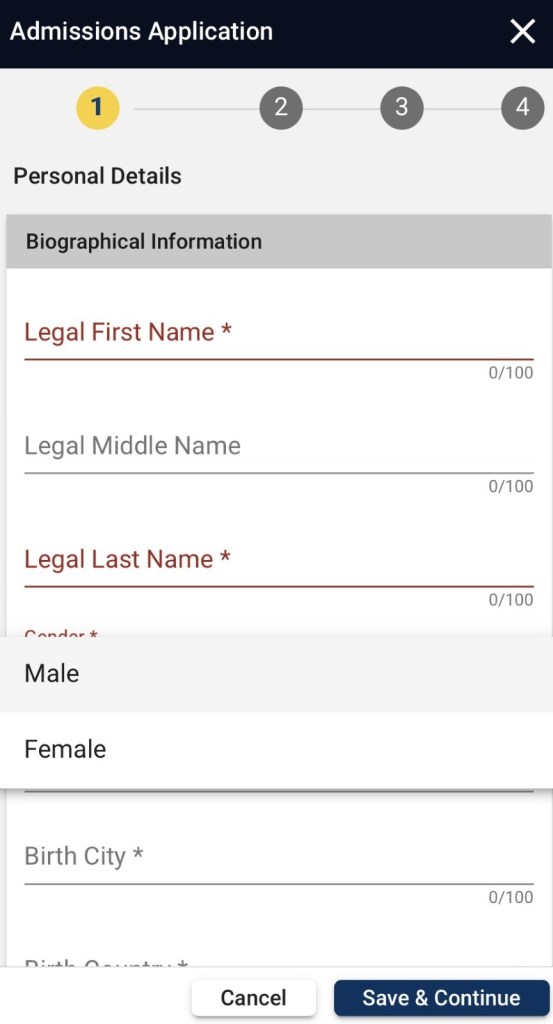
The university’s admission application still requires a legal name and limits gender selection to male or female.
Similarly, the JCU NetID system, which serves as the institutional email used for accessing online services, can only be generated with an individual’s legal name.
The JCU IT Department is working on procedures to accommodate preferred names in the future.
JCU’s gender-inclusive program arrives at a time when Italy’s political climate is tightening around LGBTQIA+ rights.
The recent “Resolution 7-00203,” introduced by Rossano Sasso, Undersecretary for the Ministry of Education and Merit, and a member of Italy’s far-right Lega Party, aims to remove what is labeled as “gender ideology” from sex education programs in Italian schools.
Approved by the Culture Committee of the Italian Parliament on Sept. 11, the resolution insists that sex education should not “assume the overcoming of the sexual binary,” opposing any curriculum related to the gender spectrum.
In response, organizations like Arcigay Roma and ToccaANoi (It’s Up To Us) organized a sit-in outside the Ministry of Education and Merit in Trastevere on Sept. 25.
The initiative, called “Scuola Libera Per Tutt3” (Free School For All), advocated for inclusive educational programs that address gender identity, consent, and respect for diversity.
“The government’s new slogan is repression,” said Arcigay Vice President Pietro Turano.
On Oct. 16, the Italian Parliament passed a bill sponsored by Deputy Carolina Varchi of the far-right party Fratelli d’Italia, which classifies surrogacy as a universal crime.
The law imposes penalties of up to two years in prison and fines of up to one million euros on Italian citizens who seek surrogacy services abroad, positioning Italy among the few countries to criminalize the practice internationally.
Read More
- Campus Pride– Colleges and Universities that Provide Gender-Inclusive Housing the Unites States.
- The Importance of Gender-Inclusive Housing
- Gender-Inclusive Restrooms: Creating Safe Spaces
- ‘A matter of physical safety’: What it means to deadname someone and the impact it makes
- Transgender students fear being “deadnamed” at college
- A Resource Guide For Transgender Activists and Allies
For more information regarding GIH, contact the Housing Office at housing@johncabot.edu or visit their office at the Gianicolo Residence, located at Vicolo della Penitenza, 26.
Applications must meet semester deadlines, as late submissions are not accepted by the Housing Office. For Spring 2025, the application deadline was Nov. 1. For Summer I, the deadline is April 15, 2025. For both Summer II and Summer II Mini, the deadline is May 15, 2025.
The Gender Inclusive Housing initiative is dependent on student requests. The program has been incorporated into JCU’s housing policies and regulations.
Feature image: JCU Housing Office at the Gianicolo Residence. Credit: Francesca Motta
 thematthewrome.com