

John Cabot University Delegation Attends the UN Conference
Report
By Nicolette Alexandra Brito-Cruz | Edited by Annalucia Scotto di Clemente
At the 29th Conference of the Parties (COP29) in Baku, Azerbaijan, in November, one message echoed clearly: the Global South is disproportionately bearing the brunt of climate change, while the Global North continues to fall short in its accountability and commitments. Delegates from across the globe united to emphasize the urgency of equitable climate action, funding, and policy implementation to protect the most vulnerable communities.
Among these delegates and activists voicing their concerns at COP this year, was a student delegation from John Cabot University led by Dr. Michele Favorite. This year’s group consisted of two undergraduate students, Martina Atanasova, who focused on climate change in the MENA region, and Chloe Doughtery, who focused on water sustainability in East Africa. One master’s student, Nicolette Alexandra Brito-Cruz, also joined them and focused on state accountability and representation of the global south.
These students had the unique opportunity to collaborate with and represent two non-profit, civil societies: Ishaka2250 and Improve Your Society Organization (IYSO) – Yemen. Thanks to them, they were able to obtain badges to participate in COP. With that being said, below you will see a summary of the main points of COP29, specifically as they pertain to the Global South.
The Disproportionate Burden on the Global South
During a high-level segment on Nov. 19, developing nations repeatedly underscored the severe impact of climate change on their populations. For countries like Nauru, the stakes are existential. Ministerial advisors from Nauru highlighted that their island nation cannot afford to wait for another COP to see real progress. They stressed that islanders shouldn’t be fighting to survive, reminding the world of the human toll of inaction.
Similarly, Senegal’s representatives described how rising river surges in West Africa have displaced thousands and threatened vital infrastructure. Thailand reported catastrophic landslides and flash floods, while Namibia emphasized how the poorest and most marginalized communities are suffering despite having contributed the least to global greenhouse gas emissions.
These accounts are not isolated; they are part of a larger pattern in which the Global South bears the cost of the Global North’s historical emissions. Burundi’s representative powerfully stated, the Global South is the slave to the Global North, encapsulating the injustice inherent in the current global climate framework, where developed countries can afford to build new infrastructures and better care for their residents after natural disasters, while underdeveloped countries struggle to.
Actions from the Global South: Leading Despite Challenges
Despite limited resources and negligible contributions to global emissions, many Global South countries are leading ambitious climate initiatives. Cambodia is pushing for carbon neutrality by 2025, spearheading anti-plastic campaigns, and planting over a million trees. Malaysia has finalized a Climate Change Bill and emphasized sustainable biodiversity management, all while contributing less than 1% to global emissions.
Costa Rica continues to champion decarbonization as a central pillar of its policy, linking environmental protection with broader human rights, including women’s rights. Uruguay has introduced adaptation plans focused on agricultural justice, though these depend on the availability of financial support.
Laos, Rwanda, and Nigeria have also each laid out comprehensive strategies for achieving net-zero emissions by mid-century, but all highlighted a pressing need for increased international climate finance. As the Namibian delegate put it during the segment: talking without action is useless.
Accountability of the Global North
Representatives from Austria, Romania, and Monaco acknowledged the disparity between nations’ historical responsibilities and their current impacts. Austria’s Federal Minister for Climate Action pointed out that the commitments made at COP29 and previous conferences would only be meaningful if delivered upon. She reminded delegates that 2024 is the hottest year on record and it will only continue to get worse, as she called for a new collective financial goal specifically aimed at helping the Global South.
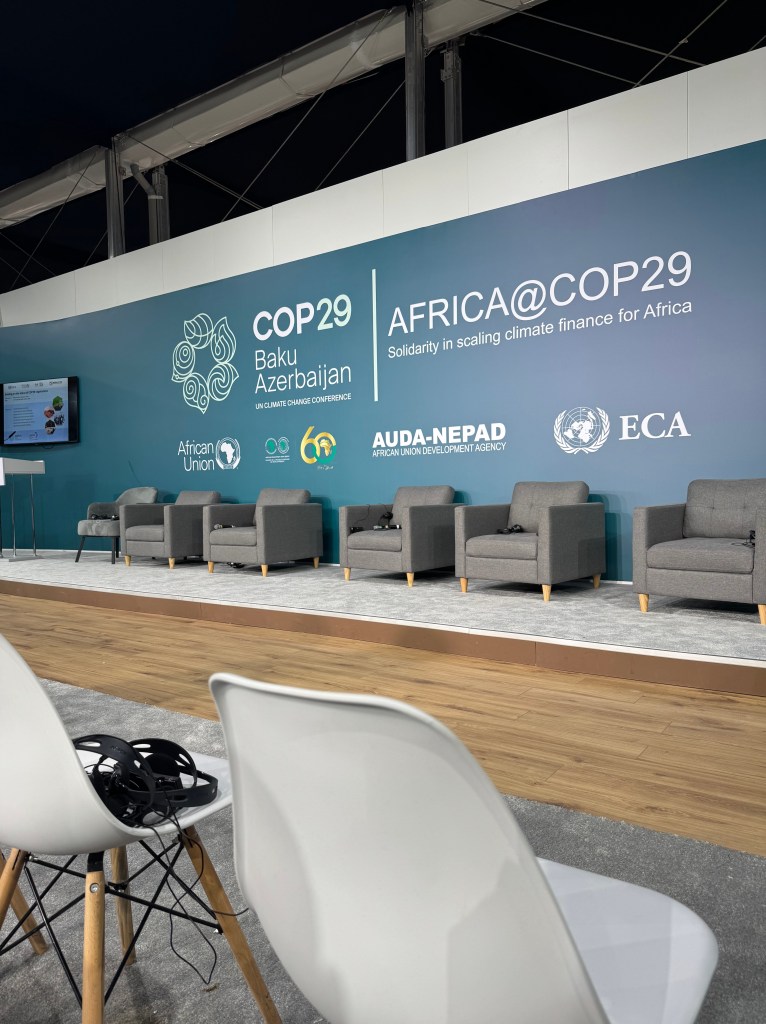
Developed countries’ failure to meet their financial commitments continues to hinder progress. Malaysia and Thailand emphasized the lack of transparency and accessibility in current climate finance mechanisms, which make it difficult for Global South nations to access the funds necessary for adaptation and mitigation. Africa@COP29 briefing on the status of negotiations on Nov. 16, representatives called for investment in developing countries as an ethical and practical imperative.
A Colonial Facade at COP29
Hosting COP29 in Baku, Azerbaijan, starkly exposed the contradictions of global climate diplomacy. While the conference centered on justice and equity, Azerbaijan leveraged the platform to distract from its violent displacement of over 100,000 Armenians from Nagorno-Karabakh—a campaign widely condemned as ethnic cleansing and genocide.
This blatant greenwashing reflects a colonial dynamic where oppressive states use global platforms to obscure their violence. By prioritizing Azerbaijan as host, the UNFCCC undermined its own commitments to justice, allowing climate action to serve as a shield for human rights violations. Delegates and activists, particularly from Armenia, emphasized that climate justice must not be separated from broader struggles against systemic oppression and imperial violence.
The global climate movement must confront these contradictions. A decolonial approach to climate action demands accountability not only from the Global North but also from states exploiting these platforms to perpetuate harm, ensuring that future COPs reject complicity in injustice.
The Path Forward: What Needs to Change?
The outcomes of COP29 reiterated that achieving climate justice requires more than pledges; it demands accountability. Countries in the Global North must:
- Fulfill Financial Commitments: Honor the $100 billion annual goal for climate finance and establish a transparent mechanism for distributing these funds equitably.
- Support Adaptation and Mitigation Efforts: Ensure the financing of ambitious adaptation plans and loss and damage mechanisms that directly benefit the Global South.
- Acknowledge Historical Responsibility: Recognize their outsized contribution to global emissions and lead in the transition away from fossil fuels.
- Confront Neo-Colonialism in Climate Action: Reject the exploitation of global platforms to legitimize violence. Azerbaijan’s use of COP29 to obscure the ethnic cleansing of Armenians in Nagorno-Karabakh highlights the urgent need for a decolonial approach that centers justice, accountability, and the protection of marginalized communities.
As Ambassador Abdel-Latif of the Cairo International Center for Conflict Resolution noted, addressing climate change is not just an environmental imperative but also a peacebuilding necessity. Climate-induced displacement and resource scarcity are fueling conflicts in already vulnerable regions like the Sahel. A holistic, inclusive approach is essential for global stability.
Conclusion: A Shared Responsibility
COP29 highlighted both the progress and the deep divides in global climate action. As countries like Singapore and Costa Rica champion decarbonization and sustainability, the broader success of the Paris Agreement hinges on cooperation and accountability. The world cannot afford further delays. It is time for the Global North to match the Global South’s leadership with the resources and commitment needed to secure a livable future for all.
The message from Baku is clear: the fight against climate change is a shared responsibility, but it must be fought on equitable terms.
Let this be the year where words finally turn into action.
Further Readings
Developing nations slam COP29 $300bn climate deal | DW News
Baku, Cop29 ended with only partially encouraging agreement
Cop29, accordo di compromesso. 300 miliardi per i Paesi poveri, nessun taglio alle emissioni
 thematthewrome.com