

The new facilities promise the upgrades and the extra space that students have hoped for. As the project moves forward, however, students adjust to living and studying on an active construction site with daily disruptions, including noise, dust, limited lighting and limited walking access. Student Affairs urges students to report any issues.
News
By Gabriella Nassiff | Newsreporter
After major construction work over the summer, JCU continues its campus expansion this fall—a project estimated to be ready by Fall of 2025. The major works are the renovation of the newly rented building next to Frohring Campus and the remodeling of the Lungara Building’s student residences.
According to JCU’s President Franco Pavoncello, JCU has a contract to rent the new building for 28 years. It is a 15,000-square-foot building that will allow a student population increase of about 200 to 300 students.
The city of Rome has been undergoing major construction since 2020 with the Italian-government bonus for refurbishments during the COVID-19 pandemic, the “superbonus” incentives for energy saving home renovations, and the more recent preparations for the arrival of up to 32 million to 35 million tourists for the 2025 Jubilee, a major Catholic event held every 25 years.
Although students have speculated on a connection between the construction at JCU and the construction in Rome, President Pavoncello said that the that planning for the new building at JCU has been underway for several years, and the timing is coincidental.
The “new building” will be connected to Frohring Campus via a walkway. Among the facilities provided are:
- more classrooms and faculty rooms, a screening room, a dark room for photography classes, a psychology lab, an innovation lab, a floor with classrooms dedicated to art and design, a student lounge, a café bar, and a terrace/courtyard.
New building renovations from October to December this fall.
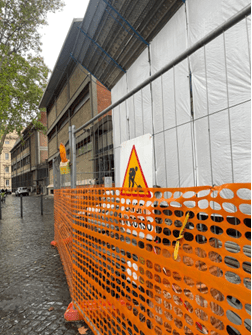
Photo by Gabriella Nassiff.
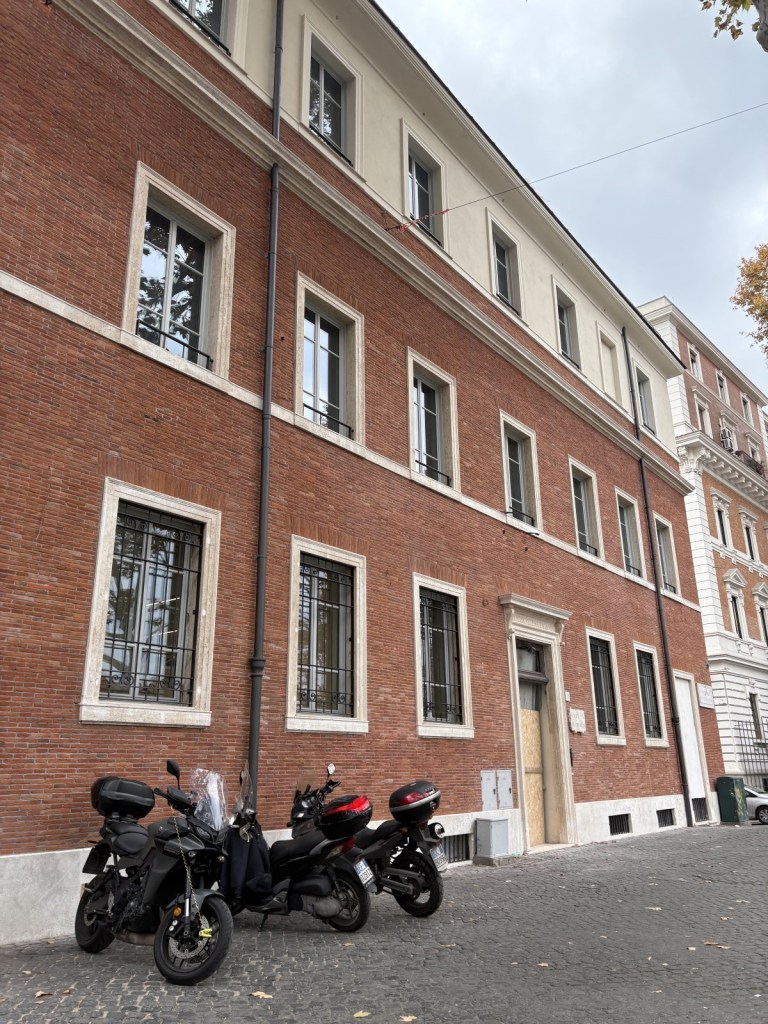
Photo by Gabriella Nassiff.
View from Frohring Campus on Oct. 10, 2024.


University space expanded into two more buildings this semester.
- The Foresteria Building, located next to the Guarini Campus houses the Center of Graduate Studies.
- The Foglio Building now hosts the Writing, Math and Foreign Language Tutoring Center located on the same street as Frohring Campus, Lungotevere Raffaello Sanzio.
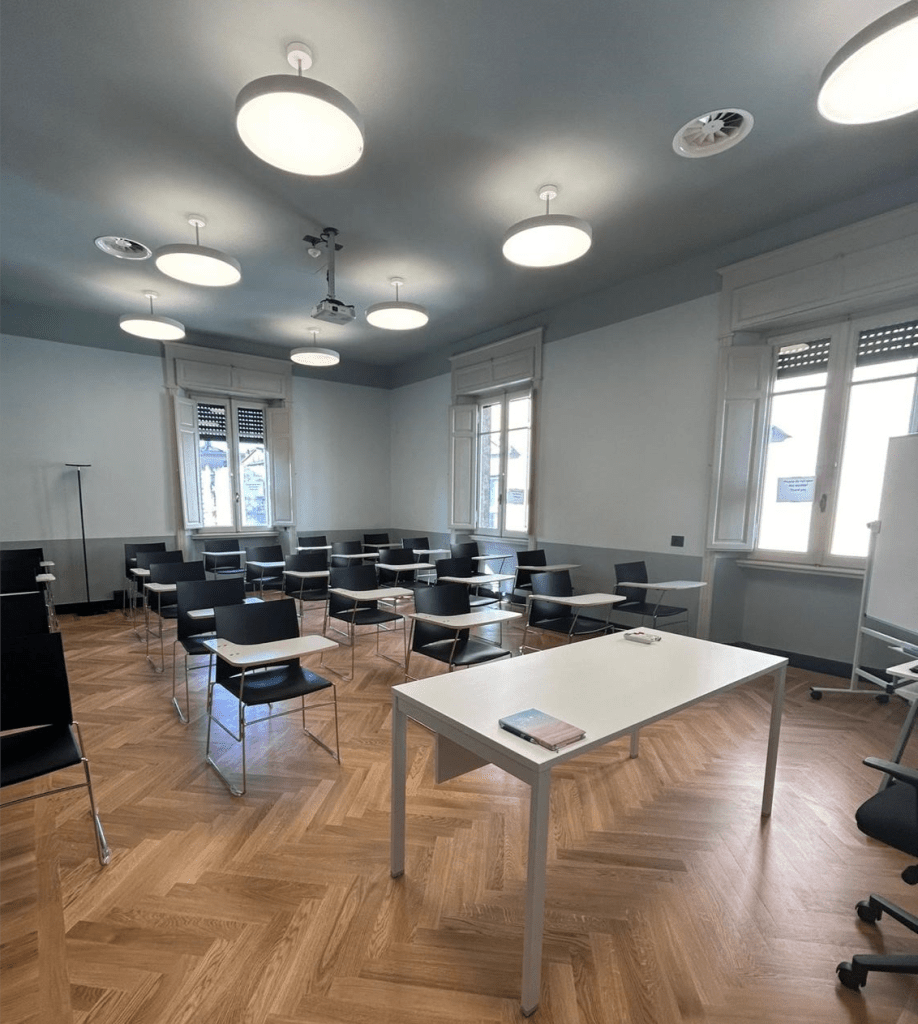

While the construction work finalizes, classes are being temporarily held in other rented spaces around Trastevere.
- The “Horti classroom,” a space located inside Horti Hotel at Via di San Francesco di Sales.
- The three “Chapel classrooms,” located in the church at Via di Santa Dorotea

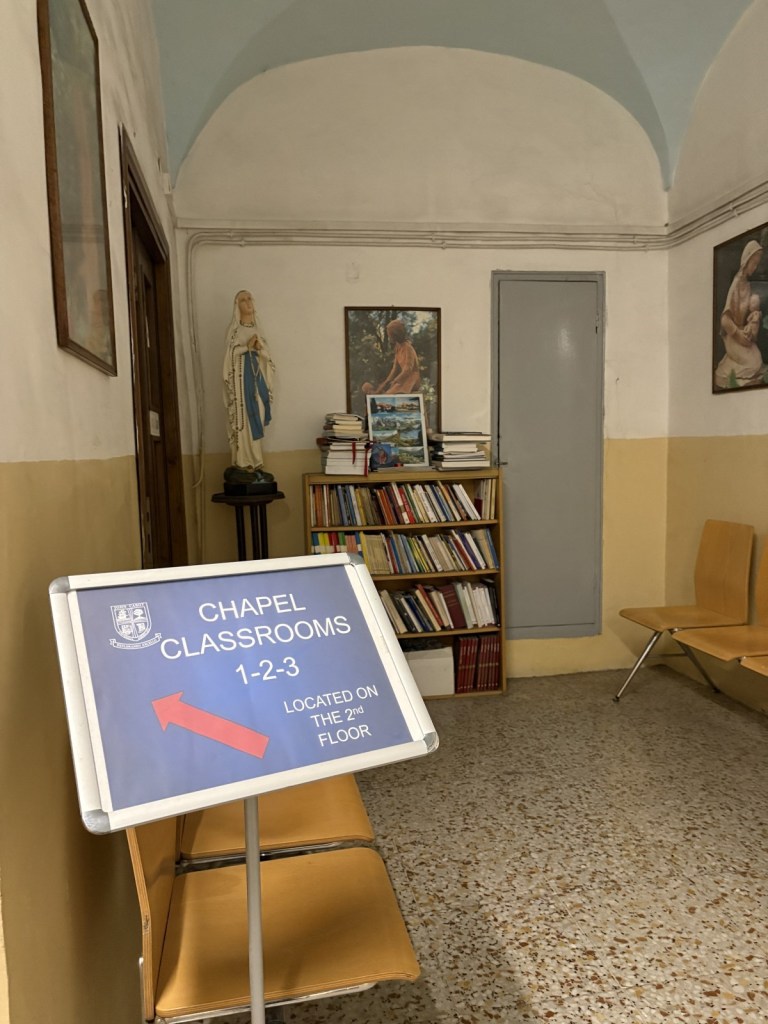
JCU’s VP for Strategic Initiatives and Operations Jose B. Alvarez says that the renting period of these spaces depends on when the remodeled building will be finished. A specific date of until when JCU will rent out these properties is still uncertain.
Lungara Building- Student Residences
The Lungara Building holds the Mimose and Corsini classrooms, the Orientation office, the Communications Department office, and the Community Standards Office, among other spaces.
Renovations plan to accommodate approximately 86 more beds for students, according to VP Alvarez. Lungara apartments currently hold 264 beds for students, and the plan is to offer a total of 350 beds.
at Lungara. Courtesy of JCU.
Other ongoing renovations in the Lungara Building include fixing and installing new heating and cooling.
These renovations will continue until the university can access all the Lungara apartments. Residents external to JCU who currently live in the Lungara Building are gradually moving out over the next couple of years.
Most of the reconstruction in the Lungara Residences took place during the summer to avoid disrupting students, according to VP Alvarez. He said that this was a necessary precaution to ensure the safety of the students and staff, even when this was “a huge loss” to the university since the Lungara apartments were not in use at all.
The new facilities promise the extra space that many students had hoped as well as “exciting upgrades.”
Student Esther Lopez, a psychology major, said she is “particularly excited” about the psychology lab of the new building, and that she “can’t wait” to see and inhabit the new spaces and classrooms.
As the project moves forward, however, students have been adjusting to life on an active construction site with daily disruptions including noise, dust, limited lighting and limited walking access.
Study abroad student, Joey Tracht, said that in the first couple of weeks of the semester she was informed by her program coordinator that the construction in Lungara was meant to be done within a month. According to Tracht, the dust from the construction in her Lungara apartment caused her to get sick at the beginning of the semester.
JCU degree-seeking student Elena Schulenburg said she didn’t receive information or an email about the ongoing construction taking place in Lungara Apartments before she moved in.
“I wish they had informed me beforehand,” said Schulenburg. “Because I know there is no construction in Gianicolo, and not that I would have chosen a different housing option, but I think there should have at least been a heads up saying, ‘ok, this is how long the construction will last, and this is what’s happening.’”
The loud noises from the construction affected Schulenburg’s ability to study or take naps in her apartment. She says that when her professors open the windows to get some air circulation, it can get quite loud, especially when they are having discussions in class.
Lopez said that when the scaffolding was up last semester, her living room had no natural light. The scaffolding also covered her bedroom window, and she had to have the blinds and window shut to prevent construction workers from being able to see through her window.

Photo Credit: Gabriella Nassiff
“I would say we are responsive” if a student brings an issue or a complaint regarding dust or anything construction-related, said Rebekah Sagredo, the Assistant Dean of Students for Residential Life. She would take this into account and “respond accordingly.”
“It depends on what the situation is, how many students there are, where we can house them, so there are a lot of variables,” said Sagredo. “But as long as we know, then we can intervene and do something. Once we are told, then we put into action various methods to help the students in their studying and living situations,” she said.
The Housing Administration Coordinator, Janet Menasci, said that placing students in emergency housing is an option depending on how the construction is affecting the students.
A second-year business student, who decided to comment and remain anonymous, said that even with doors and windows shut in her classes in Frohring, the noise still makes it hard for her to focus during class.
As the project progresses, students note that the disturbances are gradually decreasing.
“The dust and noise have started to improve,” said the second-year business student, indicating some relief on the horizon.
The Assistant Director of Health and Wellbeing, Camilla Alessi, said that support is available for students feeling stressed or anxious due to the disruptions.
“While our department can provide support for affected individuals, we don’t oversee construction,” said Alessi. “We encourage students to reach out for resources if they’re struggling.”
University staff also said that they urge students to formally report any issues affecting their learning environment to ensure they can provide adequate support.
“We encourage students to speak with staff to access available support and resources,” said Alessi. “Our team is here to help with any wellbeing needs related to the disruptions.”
 thematthewrome.com