
Spotlight
By Brontë Delmonico | Edited by Meredith Brooks
This semester JCU has welcomed several new clubs, and I had the privilege of speaking with Sufiyan Salman, President of the Literature and Creative Writing Club. We discussed the club’s exciting upcoming events and initiatives, as well as the profound impact and significance of literature in shaping perspectives and fostering creative expression.
Delmonico: Thank you so much for meeting with me today, Sufiyan! So, the first question that I wanted to ask you is what inspired the formation of the Literature and Creative Writing Club, and what unique perspective does your club bring to the university’s creative community?
Salman: Well, I arrived here just last fall, and when I was trying to join all the societies and clubs, I was pretty surprised to learn that there was no literature or creative writing club. As someone who is first and foremost a creative writing enthusiast — I love poetry, I love the art of writing in general — this was very unexpected.
I later learned from Federica, who works in student engagement, that there had been a literature club before COVID, but it became inactive due to people leaving and the pandemic. I decided then that I really wanted to do something about it because why not? I have the expertise and a unique perspective to bring to the table.
One thing I wanted to do differently from the beginning was to move away from the ethnocentric focus of literature that I had experienced in school. In high school, and I think many people can relate, the literature that we learn is dominated by British Romantic era writers or American authors; it’s all modern and contemporary works that are Western and centralized. It felt very Western-centric, and I didn’t like that.
Being from Pakistan, I’ve been exposed to a rich tradition of Middle Eastern and South Asian poetry. I thought, why not bring elements from different cultures around the world into the club? So, after submitting the application and working with Federica to get everything in place, I was very set on creating a platform where we could discuss literary works from diverse global perspectives.
Looking ahead, I’d also like to introduce a political edge to the club. Literature and politics have always been intertwined, and I think it would be interesting to explore that connection.
Thank you for such a thoughtful answer. So, what kinds of activities, events, or projects do you have planned to engage students in literature and creative expression?
Oof, okay. Well, this is our first semester, and by some standards we might have bitten off more than we can chew. There’s just a lot happening. Primarily, we’re running a book club; we’re planning to discuss two books — hopefully, everything goes smoothly. Fingers crossed! The first book we’ll be discussing is Dead Poets Society, followed by The Hitchhiker’s Guide to the Galaxy. It’s all in motion right now.
As for Dead Poets Society, we’re actively working on it. Earlier this semester, we had a tabling event where people could pick up the book by making a small donation of just three euros and join the book club. That was exciting!
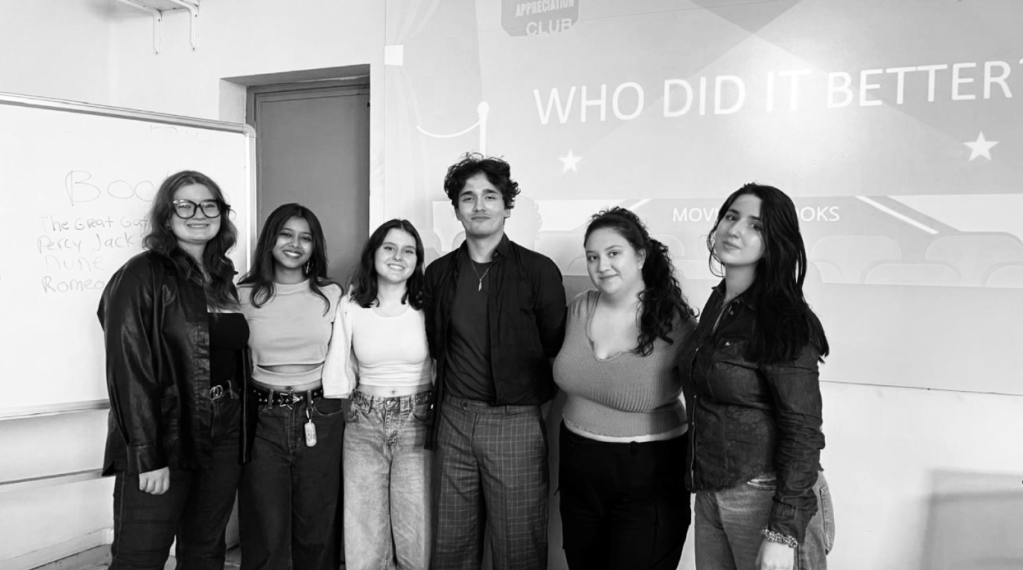
In early October we’re collaborating with the Film Appreciation Club to compare literature and their modern contemporary adaptations, which should be a lot of fun. Another big event we have coming up is a slam poetry event in collaboration with BASA (the Black and African Student Association) and various cultural clubs. We’re really excited about being part of that.
Another major event is our collaboration with the Studio Art and Design Club. We’ll take 10 creative writing submissions — poetry or other creative pieces — from our members, and the Studio Art and Design Club will translate them into visual art. Both the writing and the artistic interpretations will be displayed in an exhibition at the end of November!
We also have spotlight events where we’ll be working with the Queer Alliance, OLAC (Organization of Latin American Cultures), the Psychology Society, and the Women’s Leadership Initiative. We’ll be showcasing works from authors within those specific niches.
Additionally, we’re planning a few creative writing workshops and hopefully a Christmas event later on. There’s a lot going on, and we’re trying to make as much happen as we can!
That all sounds incredibly exciting, and I’m really looking forward to participating in some of these events! I’d love to hear more about the role you see your club playing in fostering a community for writers, poets, and artists on campus. You mentioned this a bit already, especially in terms of incorporating a more political aspect. Could you expand on how you plan to approach that and what impact you hope it will have?
Of course. I really hope that, in the future, the club will play an essential role, especially since there’s a noticeable gap in creative writing opportunities within the JCU community. So, I guess hopefully in the future we can create an exclusive platform for creative writers. Fingers crossed; we might even collaborate with Matthew! Personally, I’d love to focus more on creative writing, as it’s my passion and specific niche.
Some of the other board members are more focused on more traditional, formal literature, but I want to propel the creative writing aspect further because there’s so much potential there. Oh, and speaking of events, we have an exciting one coming up that I forgot to mention; an Irish author will be visiting around November 22nd to host a creative writing workshop.
As for the political angle, while there’s already the International Relations Society for direct political discussions, I believe politics is inherently tied to any form of creative expression, whether it’s writing, art, dance, or any other medium. Politics plays a major role in all of these forms.
And with everything happening right now in my part of the world, which I think is crucial to highlight, I plan to focus more on the political side of creative writing. I’d like to integrate more modern works with a political edge and create spaces for discussion. For those interested, we could explore deeper political insights, produce creative works on these themes, and potentially publish them somewhere.
Fantastic, thank you so much for that thoughtful and well-articulated answer. My last question, which you briefly touched on earlier, is: In what ways do you encourage diverse forms of creative expression? And how can students from different academic backgrounds contribute to the club?
Well, as far as our board is concerned, we’re all from different parts of the world, which really helps because we each bring a unique perspective. None of the decisions we make are unilateral; everything is a collective effort. Whether it’s an event we’re planning or a collaboration we’re considering, it’s a very inclusive and dynamic process.
I want to extend that same inclusiveness to the broader JCU community. Personally, I have a lot of experience with British and Western poets and authors, but my expertise lies more with French poets, Middle Eastern poets, and authors from South Asia and North Africa.
So, on our Instagram page, we highlight weekly author spotlights — both authors who are connected to the JCU community and global writers. We also feature book recommendations often from different cultures, including translated works. For our book club, we want to incorporate books from a variety of cultures, which makes the discussions more interesting and diverse, rather than focusing on the same familiar works.
In terms of creative expression, I believe literature is deeply connected to personal insight and the identity you build. Personally, I think you’re not truly literate if you don’t read beyond your own culture. History is one thing, but if you don’t explore perspectives outside your own, your literacy remains limited.
Especially in a liberal arts institution, it’s important to have a broad focus and be knowledgeable about what’s happening around the world. And I think that this is especially important as we have a lot of American students here who sometimes tend to have a more limited view of the world. In contrast, people from other parts of the world often have no choice but to be aware of global issues due to the nature of their lives. So, I want to do my part to encourage broader knowledge and understanding through our club’s activities.
Thank you so much for your time and insights today. This has been a really engaging conversation, and I appreciate you sharing your perspective with me. I truly believe your club is a fantastic addition to the JCU community.
We hope so!
Absolutely! I’m really excited to participate in some of the upcoming events. Thanks again for taking the time to chat with me!
You can contact The Literature and Creative Writing Club at literatureclub@johncabot.edu, and follow their Instagram at @jculiteratureclub.
 thematthewrome.com