
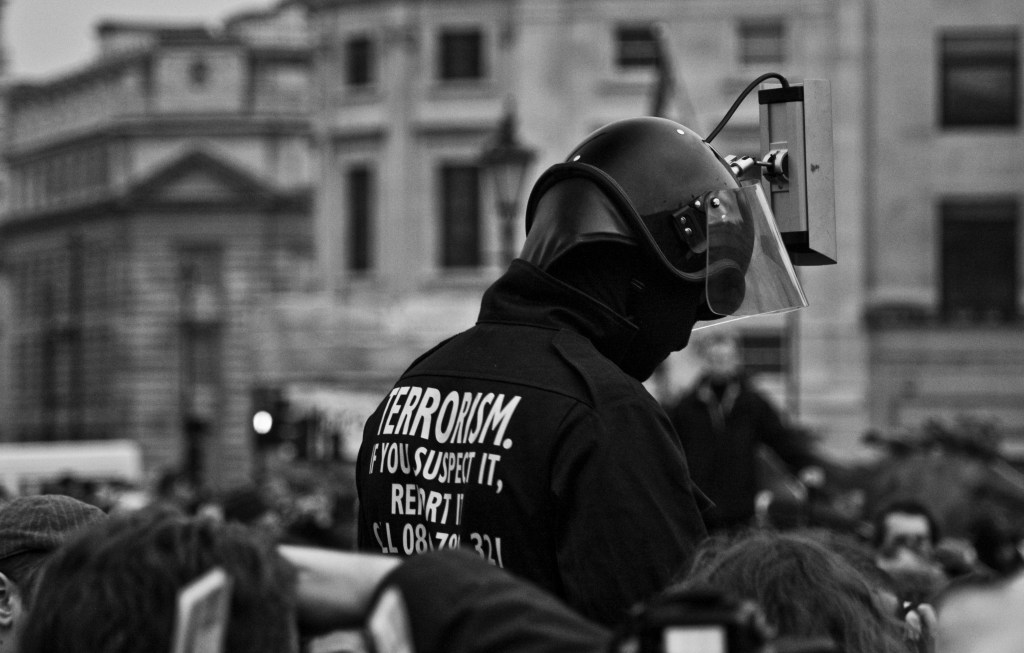
Student Commentary
By Nicole Di Maria and Harman Singh/ Matthew staff and Contributor | Edited by Sara Segat
Almost one hundred forty people died and more than one hundred were left injured in what CNN reported as the worst terrorist attack Russia has experienced in decades. The responsibility for this terrorist attack, perpetrated in a concert venue in Moscow on March 22, was claimed by ISIS – specifically, a branch of ISIS that arose in Afghanistan in late 2014. This is the Islamic State Khorasan (ISIS-K), a group with a frightful reputation of brutality, named after an old expression referring to an area encompassing portions of Afghanistan, Turkmenistan, and Iran.
Nevertheless, Russia had been warned about the attack, but Putin disregarded the warnings as blackmail intended to intimidate Russia, failing to prepare an adequate plan of defense and response. As Reuters explained, while Moscow mistrusted Washington’s intentions and downplayed the information it provided, it was more difficult for the Kremlin to disregard intelligence about the terrorist attack from its diplomatic partner Iran. This latter indeed has prompted real concerns about the efficacy of Russian security agencies once the attack happened. In this context, it is important to ask ourselves the right questions to conceptualize this issue correctly.
Take the question of why terrorism persists in its various forms till this day. The history of terrorism as a tactic employed by various groups and States goes into the very depths of human history, and yet, in our liberal-democratic order – where we are led to believe that the resolution of differences and conflicts is supposed to be mediated through peaceful channels – terrorism continues to be deployed by various groups. There are some important factors that shed a light on why terrorism continues on, such as: a lack of trust between States resulting from geopolitics, a narcissistic attitude of the State which overestimates its structures’ resilience and security, and the lack of an internationally agreed upon definition of terrorism.
Does the lack of an international definition of terrorism mean that anything goes? Is the saying “one man’s terrorist is another man’s freedom fighter” true? On this point, international law is quite clear – the answer is no. There are narrow definitions of what freedom fighters, or national liberation movements are, and what criteria and behaviors they must adhere to. Indeed, Article 1(4) of Additional Protocol I to the Geneva Conventions clarifies that “peoples [that are] fighting against colonial domination and alien occupation and against racist regimes” qualify for the full legal protections of wars that might take place between two sovereign States. However, this carries the additional requirement that national liberation movements must respect all the laws of war concerning combat, organization, humanitarian aid, and distinguishing between combatants and non-combatants. If each State has its own definition on who a terrorist is and what they do, it becomes quickly difficult to agree internationally upon which groups should be responded against and how to do so. In an international sphere where diplomacy is already difficult, this fight over definitions only enhances existing geopolitical mistrust.
Secondly, in terms of practicing and implementing counterterrorism measures, the States today have certainly learnt from past mistakes. Indeed, after the 9/11 attacks on New York, the United States and the rest of the world took steps to increasing security measures everywhere. Air travel was permanently altered following those attacks. However, when it comes to the case of the US on September 11th, or Israel on October 7th, or Russia on March 22nd, we find in each of these cases that the State – one which prides itself on being strong and secure – had advanced notice of the attacks and yet still fell victim to them. Israel had possessed a copy of Hamas’ attack plan – which did not include a date for the attack – more than a year before it was carried out, but incorrectly determined that the plan was too difficult for Hamas to carry out. We see the same with Russia, who possessed advanced knowledge of the March 22nd attack, courtesy of the United States. Time and time again, we see the State underestimate its adversaries and the people bear the cost of the mistake. However, people only live once and when they die, the tragedy of such deaths haunts the memory of the collective, and shames the State. Thus the State should always take utmost caution in fulfilling its obligations to protect the people.
What about ethics and countermeasures? Would it be understandable to use certain responses, namely torture, against terrorists? Apparently, Russia believes it is legitimate. Human Rights Watch reported horrific torture being perpetrated by official Russian authorities against the terrorists, freely recording them on video and sharing on social media. In one video, one of the terrorists is shown being beaten by people wearing camouflage uniforms without insignias while they attempt to get information out of him. The police forces were also seen on camera threatening to chop off his head, let a dog run amok, and shoot him in the legs.
However, International Law is clear on this matter. The Convention against Torture and Other Cruel, Inhuman or Degrading Treatment or Punishment of 1984 has 173 State Parties. Article 10(1) of said Convention is made to ensure “training of law enforcement personnel, civil or military, medical personnel, public officials and other persons who may be involved in the custody, interrogation or treatment of any individual subjected to any form of arrest, detention or imprisonment.” This latter article is then enhanced by its following. Indeed, Article 11 assesses that State Parties are obliged to regularly review “interrogation rules, instructions, methods and practices as well as arrangements for the custody and treatment of persons subjected to any form of arrest, detention or imprisonment in any territory under its jurisdiction, with a view to preventing any cases of torture.” Is Russia then binded by such regulations?
At first glance it might seem like Russia will not be binded by the Convention against Torture; as Russia did neither sign nor ratify the Convention, its official authorities’ actions can be overlooked. However, the Committee Against Torture – established through that same treaty – ruled in 2008 that Article 2 – establishing the obligation of States to “take effective legislative, administrative, judicial or other measures to prevent acts of torture in any territory under its jurisdiction” – of the Convention reinforces the peremptory norm against torture in jus cogens as well as becoming accepted as part of international customary law. The term jus cogens designates preemptive standards in international law that are acknowledged as essential and are non-negotiable. Jus cogens principles are binding on all governments regardless of their permission, and therefore stand above Treaty law. On the other hand, customary law develops from state-established customs and behaviors that are adhered to and come from a feeling of legal duty. It develops as a result of widespread, regular state practice and the conviction that it is required by law. Therefore, Russia is, with no doubts, obliged to ensure the protection of everyone from torture, among which the terrorists responsible for the March 22 attack.
Terrorist acts are horrific, striking into the minds of the collectivity, and spreading unrest and insecurity into the people; indeed, they are totally reprehensible. However, there are a myriad of problems that we still face in countering terrorism today, ranging from the definitional issues to the practical issues of ensuring basic human rights and due process of those that commit the most heinous of crimes. The State’s hubris, which often hinders its ability to effectively counteract terrorism, then results in violations of human rights in reprisal attacks or if the accused terrorists are caught, perhaps in order to hide their shame. Notwithstanding this, it is still necessary to further serious changes in the structures of International Law. State Parties need to update the Geneva Conventions or create a new Treaty, agreeing upon a common definition of “terrorism”. Moreover, it is essential to strengthen international cooperation and transparency on security issues, consequentially raising public awareness concerning the role of international humanitarian law. Finally, the international community should consider revising the Statute of the International Criminal Court to explicitly cover “terrorist acts” as a prosecutable crime, thereby allowing a more authoritative, neutral party to effectively combat terrorists.
 thematthewrome.com