
Student Commentary
By Vittoria Caroli / Matthew Staff || Edited by Mariel Gousios
In modern times we assist behaviors that are defined as politically correct by a substantial percentage of society, but most of the time they are the opposite. What does politically correct really mean though?
With the developing of society, the emancipation of certain groups and the advancing of the way of doing politics, a new thinking method was born: the so-called “politically correct.”
This expression, as the Oxford Languages presents it, refers to “conforming to prevailing liberal or radical opinion, by carefully avoiding forms of expression or action that are perceived to exclude, marginalize, or insult groups of people who are socially disadvantaged or discriminated against.”
Yet, as time passes by, that same part of society, whose opinions are driven by politically correctness, is influenced to the point that people have lost control of the use of this expression, distorting it more every day.
At the basis of this way of thinking, there is the non-acceptation of the differences that characterize our world, although they have always existed.
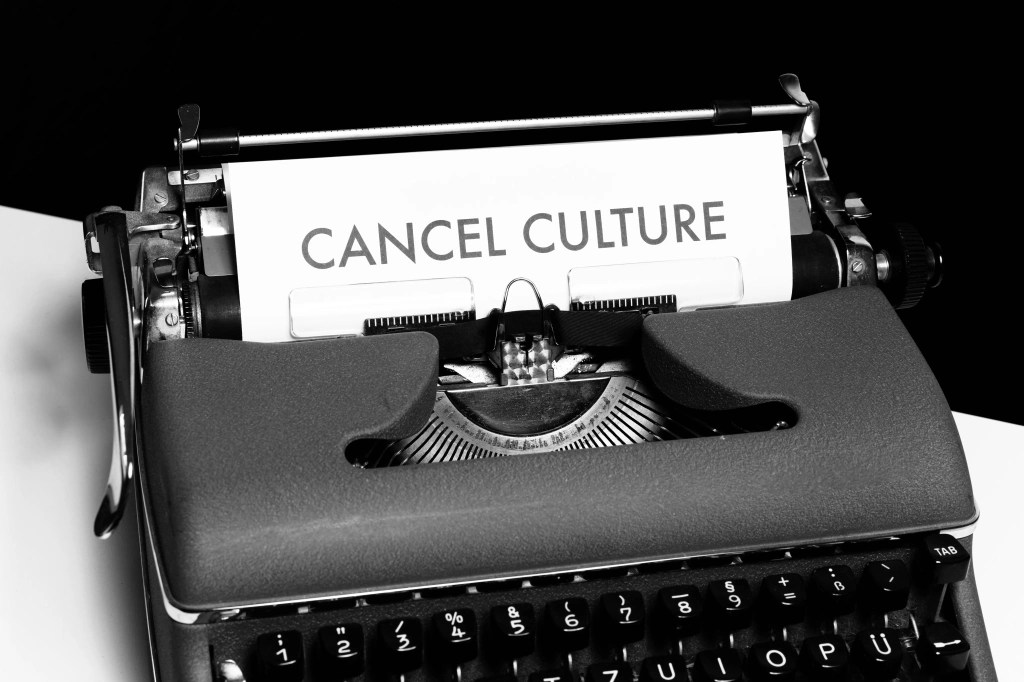
Cancel culture is the very first phenomenon which exemplifies this rejection process. It can be defined as a modern form of ostracism and indicates the tendency of removing from the cultural production, people or industries who are “guilty” of sustaining moral values that go against the rights of any minorities and gender equality. Plenty are the movies or books that have been accused of transmitting wrong teachings and behaviors such as racism, sexism, being too explicit or homophobic. At the forefront of this long ranking there is the historic musical Grease, lately re-released by the BBC. The movie itself put up a general turmoil because the scene where Sandy (Olivia Newton-John) dresses up to make Danny (John Travolta) fall at her feet is said to be too provocatory and explicit for the eyes of the British young audience. As if this accusation was not far-fetched enough, another scene has been taken in consideration as sexist and as something that deeply hurts the integrity of women: the scene presented Putzie, one of the funniest characters of the T-Birds, looking under the skirt of a girl. Do we all agree that they have gone a bit too far and that it is a clear sign of unfounded exaggeration?
The same process of canceling what is absurdly and exaggeratively believed to be offensive to any minorities of our world happened in the music field. Numerous are the examples which could be exposed to explain the insanity of this situation: I could start with the Robin Thicke and Pharrell Williams’ famous song, released in 2013, entitled “Blurred Lines” where they allude to the act of making love without her consent. For those who do not know who these two artists are, I have plenty of cases to refer to from the music of the 70s – 80s; one for all “I Saw Her Standing There”, a song by The Beatles which alluded to the act of making love with a 16-years-old girl, even though the four singers were only 20 years old. Once again, is it necessary to raise such a fuss for so little? They may be inappropriate and slightly vulgar, but it is still only a song.
Moreover, the black hole entitled cancel culture is imprisoning grammar as well. A new sign has been introduced, the “schwa”. It is used to substitute signs like @ or #, that some people use to avoid the masculine or feminine, otherwise who they refer to will not be included. It is a neutral vowel. Yet, as human beings, are we neutral?
And if you thought that what I am stating does not apply to most of the things in our lives, I have other examples for you, since literature did not escape from the changing process of cancel culture either. Agatha Christie, one of the greatest writers of all time, has been trapped into the cancel culture strategy because several sentences or even words she used in her novels have been banned because they are considered offensive. From the expression “black marble” to describe a woman’s waist to the sentence “he has such beautiful white teeth” have been removed or changed. Even more shocking is the changing of the word “native” to “local.” How can the word “native” offend someone?
What is even more disconcerting is that the father of literature, Homer, has been pointed out as unethical. In his Odyssey and Iliad, he simply presented the characters according to the time and the circumstances they lived in; yet someone still found a way to be a nitpick. He has been accused of spreading the idea of patriarchism. They were different times, and it was completely legitimate to talk about patriarchism and about man as the only ruler, because in those times, society was driven by different values.
Reading Agatha Christie’s books does not push people to kill, reading Homer’s masterpieces does not mean you want to pursue patriarchism following the path of the characters of ancient Greece. Equally, looking at any work of art that portrays children, young girls and boys seen as the representation of perfection is everything but the invite to rape or pedophilia. Paul Gaugin and Balthus are two major painters who have been accused of being immoral because they painted children exposed to the desire of adults. It was considered obscene; yet, once again, none of those paintings represent or have the aim of representing a provocation to any sexual act.
It is a climb over a mirror. People are blinded by this utopian desire to live in a perfect world, where no differences are underlined. However, the saying that goes “the world is beautiful because it is various” is not that wrong, is it? Differences are at the base of our lives, otherwise our globe would be characterized by seven billion copies of perfect flawless human beings. Is that really what we want? The politically correctness and its consequences are ruling over our way of living. This phenomenon is stopping us from expressing ourselves, keeping us in handcuffs. Not a comment, not a joke could be said that it is considered a provocation or a disrespectful sign. Where has that slight light-heartedness that characterizes life gone?
The world is already drenched in malice and difficulties, and we should try to lower that to the minimum, not to increase it to the maximum level making it impossible to cohabit with – by pointing out everything as politically incorrect, with the obfuscated goal of reaching equality and perfection.
 thematthewrome.com