
Review
By Nicole Di Maria / Matthew staff and Harman Singh / Contributor | Edited by Sara Segat
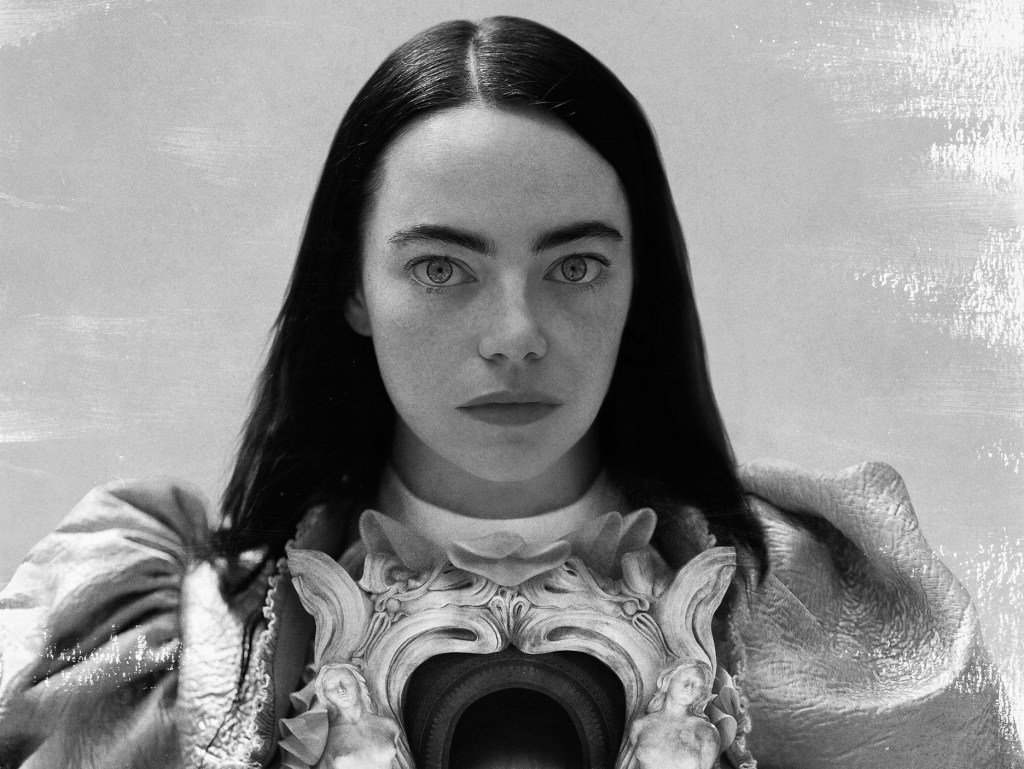
Yorgos Lanthimos’ award-winning hit “Poor Things” smashed the box office, intriguing critics and viewers across the world as a wonderfully fresh, original, and reflective film adaptation of a novel. The 2-and-a-half-hour film condenses and explores the journey of maturation and self-identification humans go through from childhood to adulthood. Following Emma Stone and Willem DaFoe’s dazzling acting respectively as Bella Baxter and Godwin Baxter, we follow a retelling of Mary Shelley’s “Frankenstein”. When a young pregnant mother commits suicide, the mad scientist Godwin rescues the nearly-dead body of Victoria Blessington, and transplants her unborn child’s brain into her adult body. The story continues with the now-reborn Bella’s maturation into adulthood, particularly when the devilish Don Giovanni – Duncan Wedderburn, a flirtatious lawyer – convinces her to run away with him on holiday. Throughout her journey, Bella discovers life, in its various nuances of color between beauty and cruelty.
The movie, winner of two Golden Globes, presents itself colorfully and through peculiar lenses, quite literally. Indeed, for the good first half hour, the movie is in black and white, and blossoms into a brilliant canvas of tones and shades. Lanthimos’ creative vision shines through in the composition and choice of camera angles that themselves add to the dramatic narrative. In particular, throughout the film’s runtime, there are well-placed scenes shot with unique fisheye lenses that twist and enhance the narrative elements of the drama.
It is also possible to grasp several additional meanings related to the aesthetic reflections – which already position this work on a fresh and modern level of beauty. Indeed, the use of bright colors soaked in the universe of magic realism among the scenography portray, from an adult-perspective, the beauty of first-discovery of the world through a child’s eyes. Still, if the colors connect the viewer with the character of Bella on a human side, the use of the fisheye lenses draws the audience away from the human connection, almost towards the position of a disconnected scientist – looking at Bella’s being as merely an experiment. These techniques give the idea of peeking through a microscope – or even better, a door lock. It almost seems like Lanthimos wanted to make us feel embarrassed, intruders of someone’s most secret feelings and experiences.
Turning to the narrative of the film, it is at once apparent the various philosophical perspectives and social commentaries that make this film – in all of its elements – truly postmodern. The splatters of feminism – encompassing all waves from first to third – post-structuralism, anticapitalism, utilitarianism, psychoanalysis, and nihilism all come together in a wonderful pastiche of flavors and textures in which all are present, yet never fully identifiable.
In this state of flux and morphology, Lanthimos’ piece impresses upon the viewer a multifaceted discussion in which we are hopefully led to question our own identities and experiences. The desires and reactions of Bella, and those around her, to her life choices and the ways in which she responds to every life’s stimuli, end up creating her finalized persona, morals, and values. Just as she matures and evolves, so do her social and political perspectives. As a young woman,when she encounters a new framework or outlook on life, she adopts it completely. But as she matures into an adult, she folds those various experiences and frameworks into one that is entirely hers. Therefore, for the intention of the story itself, it becomes essential to not reduce the artwork to one subject only. Indeed, the whole experience of Bella revolves around the confusion that discovering life brings to the human mind. In this context, looking at the film in its whole, and not scattered ideas, is the key to fully appreciating the journey of all the characters.
 thematthewrome.com