

The Vatican commissions this research to two university historians and grants them access to Apostolic Archives
News
By Olive Smith / Contributor || Edited by Temashengu Tshabalala
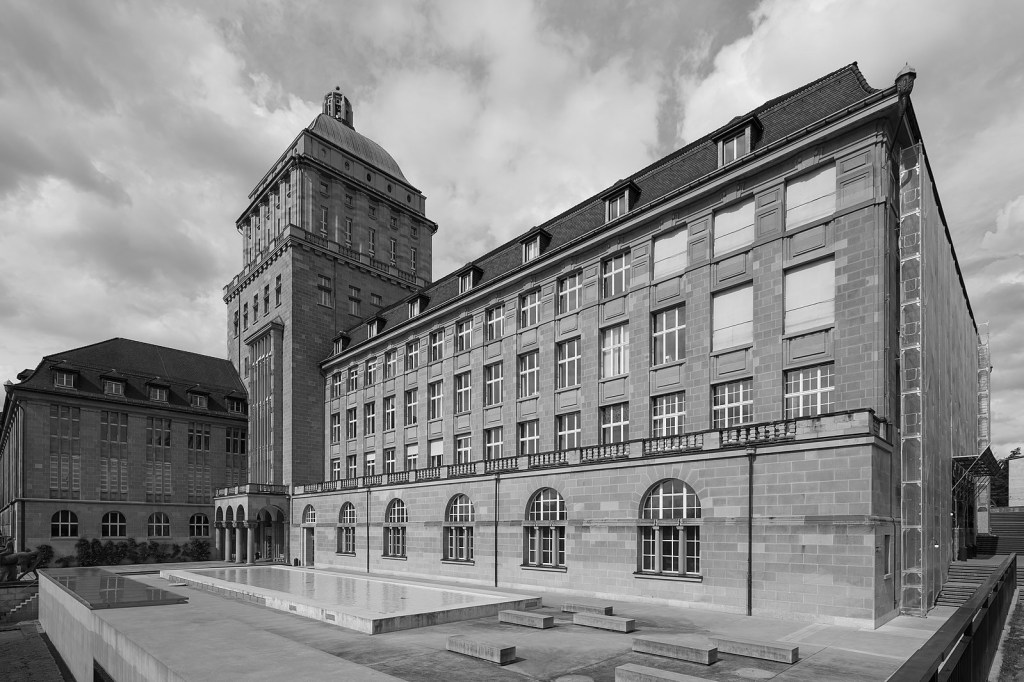
Zürich, Switzerland: University of Zurich (Main Building). CEphoto, Uwe Aranas
Historians at the University of Zurich (UZH), Monika Dommann and Marietta Meier, published a year-long study on September, 2023, tracking cases of sexual abuse in the Swiss Catholic Church since 1950. The 135-page report found 1,002 cases of sexual abuse alongside signs of a systematic cover-up, according to an interview for the University of Zurich by Thomas Gull, the editor of UZH News.
The historians were given access to the Vatican Apostolic Archives (previously known as Vatican Secret Archives)—the largest collection of Catholic books, documents and doctrine in the world. Dommann and Meier were also assured freedom of research of any Catholic documents kept out of the public eye due to strict privacy and publication laws in Italy. In addition, files in the State archives of cases investigated by the public prosecutor’s office before secular courts were also examined.
The research began once the Church contacted Dommann and Meier and requested an accumulative report. “The church approached us, and we negotiated for a long time,” said Meier.
The report was commissioned on Dec. 6, 2021 by the Swiss Conference of Bishops, a coordinating body of the Catholic dioceses in Switzerland. An advisory board elected by the Swiss History Society assisted Dommann and Meier during the study. The study was funded by the University of Zurich, the Swiss Central Roman Catholic Conference, and by KOVOS, an organization of Catholic orders and groups in Switzerland.
“It is at a time when the Catholic Church, by commissioning this study, is in search of the truth that people are massively leaving the Church,” says David Neuhaus, the general secretary of the Catholic Ecclesiastical Corporation of the canton of Fribourg. “And for us, it’s a very sad feeling.”
Nearly three-fourths of the documents examined showed that 74 percent of the reported cases of sexual abuse involve minors, a result under the assumption that a small percentage of cases were ever reported in the first place.
Domman and Meier identified accusations against 510 Catholic clerics, church staff and members of Catholic orders. The study found 921 victims and 510 offenders from all dioceses in all language regions of Switzerland as well as state-church institutions and Catholic religious orders.
The report concludes that the cases and subsequent cover-up involving the Swiss Catholic Church is not an isolated instance of sexual abuse by Church members. According to the two historians, until the 2000s, Church leaders ignored, concealed or minimized sexual abuse.
The accused of upholding or contributing to sexual abuse were men, with a few exceptions of women, according to Hans Zollner SJ, professor of psychology and president of the Center for Child Protection at the Pontifical Gregorian University, reporting to La Civiltà Cattolica, a periodical published by the Jesuits in Rome, Italy.
In an interview for the Associated Press, the historians said that leading voices in the church hierarchy “must face up to this guilt” and the necessary consequences.
“[They] carry a great share of responsibility in the fact that so many people in the heart of the Church were victims of crimes, and often suffered the consequences for their lives, for themselves, their relationships, their private and professional development, their confidence in God, in life,” Domman and Meier told AP news.
After publishing the report, Meier said that several people have contacted them, alleging they have “experienced abuse” or “know people” who have experienced sexualized violence by the Swiss Catholic priests, according to the UZH News interview.
Two organizations that assist victims and survivors of sexual assult are providing assitance and advice to the historians. Meier said that they “will be working with victims’ organizations to contact those affected.”
When differentiating a legal from a historical study, Dommann and Meier said they “are not judges” and will not “assess guilt in the legal sense, nor will [they] make recommendations that go beyond [their] area of expertise, such as the prevention of sexual abuse.”
“We are not primarily interested in the question of right or wrong, but in social constellations, how attitudes and values change over time,” Dommann said. “We’re also interested in the persistence of structures and mentalities.”
To continue the study through 2026, the advisory board who has assisted Dommann and Meier will receive an additional 1.5 million Swiss francs fom the Bishops’ Conference of Switzerland, an assembly of bishops that meets regularly to build a juridical structure and assume a guidance role at ecclesial level.
The aim will be to systematically expand the spectrum of participants, including, and not limited to talking to “ victims’ fathers, mothers and siblings, as well as to document the views of other participants, such as parish cooks,” according to Dommann.
This artice was written on December 2023 and edited for this March issue.
Suggested Readings
“A Study Can Bring Justice” Dommann & Maier
“Wide-Ranging Cases of Sexual Abuse in Swiss Catholic Church” University of Zurich
 thematthewrome.com