
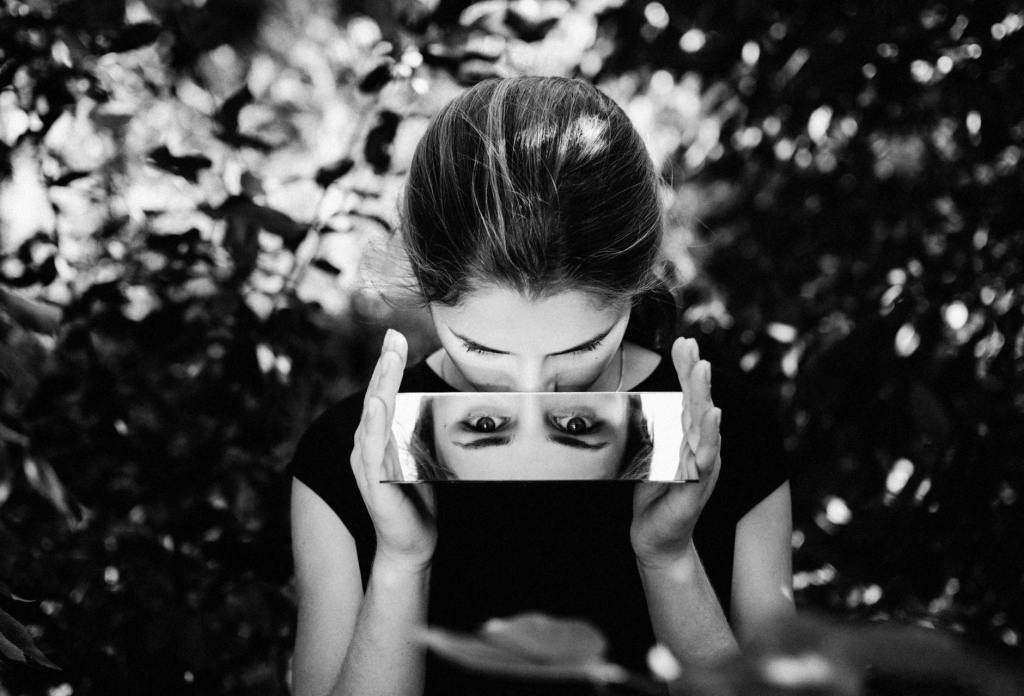
Is it more important to be beautiful or intelligent? Throughout history these two concepts have always been intertwined, either in a good or bad way. What about the 21st century?
Student Commentary
By Vittoria Caroli / Staff Writer | | Edited by Victoria Brizzi
Intelligence and beauty are two pillars that have driven – and still do – society and its perception of numerous things in life. The question to which it is quite difficult to find a real and true answer is whether these two values, in today’ society, are related or not and, if they are, to what extent one influences the other.
What really is beauty? There is no such an objective answer, since, as the saying tells us, “Beauty is in the eye of the beholder.” Besides that, the conception of beauty has drastically changed throughout the centuries, mostly because of sociological and historical backgrounds that are continuously in the gunsight of change.
According to the ancient Greek culture, beauty was strictly related to the concept of harmony and proportionality, having the male athlete as the perfect model: exceptional body shapes conciliated with amusing values as courage and self-control. This was the prototype used to prove the concept of kalokagathìa, from the Greek saying kalos kaì aghatos (beautiful and good), and Odysseus or Adonis represent the proof.
With the rise of the Roman empire, the definition of beauty was found in the figure of the roman matron: her elegance not only was enforced by her good-looking-ness, but also by using make-up and by wearing plenty of jewelry, highlighting the importance of the aesthetics over the inner self. The name Agrippina should clarify your ideas.
In the Middle Ages, charm was the specular image of perfection and uniqueness in the sense of religion. Anything that was therefore considered beautiful and worthy of appreciation – physically and morally speaking – happened to be so because it approached the human to God, to infinity.
During Renaissance, beauty was once again synonym of excellence and individuality, yet in this case it referred specifically to physical appearance. Purity, light skin, blond and long hair, deep blue eyes and prosperous bodies were the main characteristics of grace. And if you are picturing the Venere di Botticelli as the example for the definition of beauty in this case, you are on the right track.
It is the turn of Romanticism, the era of feelings. In this period, love was put at the center of the relationship between humans and, specifically, the beauty of a woman has been associated to the beauty of nature, therefore a beautiful woman meant a pure, kind, graceful and simple woman. Which better example is there if not the famous Silvia, the woman loved by Giacomo Leopardi, who he wrote a poem to.
It can be said that every era was characterized by various perceptions of the concept of beauty. Following this path, the 20th century has perhaps been the fullest one since each decade has had a specific idea of beauty. Starting off with the 1910s with three strict requisites to be considered beautiful: prominent breasts, the narrowest of waists and large hips. 1920s, beauty becomes synonym of small breasts, basic make up and narrow hips. On the other hand, 1930s where the years of Hollywood, where the more curves you have, the prettier you are, concept that will come back 20 years later, right after the 1940s, when women were seen beautiful because of their strength and courage to have gone through World War I, offering their help to whoever needed it. it is evident that it is all a matter of how women’s body was perceived: the beauty canon of the 1960s and 90s was the woman without any curves, in the 1970s, and again in the 1980s and the 2000s playing sports was the giveaway if you wanted to be seen as near as possible to perfection, since it would have helped you to gain the most toned of the bodies.
Consequently, for the past thousands of years, the women have been mostly appreciated for their appearance, perhaps because considered inferior to men.
Intelligence was not even taken into consideration, or it rarely happened; as the case of Rita Levi Montalcini, a neurologist who received a Nobel prize for medicine in 1986.
Intelligence did not represent a requisite for women, they had to stay at home and look after the house and the children. Women had to be the distraction for their men after their day at work. And how were they supposed to be so? By being beautiful. That was the only requisite. Intelligence was a man thing. And he, he could be both. If that was the case, you found the perfect man.
What about today’ society? Our society prioritizes beauty over intelligence. We have arrived at a point where a smart and creative, but not extremely good-looking person has become less valuable than a handsome and impeccable individual on the outside but empty inside.
Yet, most of the figures that made history throughout the years were, and are, gifted of judgement, brilliance and insight, and not only and firstly with glamour and appeal: Cleopatra was a highly cultured woman before being a stunning lady, who reigned the most extraordinary empire of all times or; on the opposite side, Queen Vittoria was an extremely intelligent, powerful, astute and rational woman, not at all considered attractive. Notwithstanding that, she was one of the greatest queens that Great Britain has ever had.
Currently, the situation has reversed. Exceptional personalities are followed mainly because of their physical appearance. This is what now gives them popularity. This is what our society gives importance to.
Beauty does not mean that. Beauty is much more than that. If the relationship between intelligence and beauty has always been positively exploited, in the 21st century it has become counterproductive. Our society is immersed in the opinion that beauty matters more than anything else in any field. Beauty affects your career, your entire life. And why? Because the exterior is what is always noted at first. Yet, intelligence is what drives our life, allowing us to make decisions in life, to analyze situations from different perspectives. Intelligence makes us curious. Intelligence makes us want to know more. It teaches us to never be satisfied with what we have. Intelligence stimulates us to reach perfection. Yet, perfection does not exist. And it does not exist either in the sense of attractiveness.
It is all a matter of balancing the two.
Intelligence can for sure work without beauty, but it does not mean that being smart automatically cancels out the possibility to care about the external appearance.
 thematthewrome.com