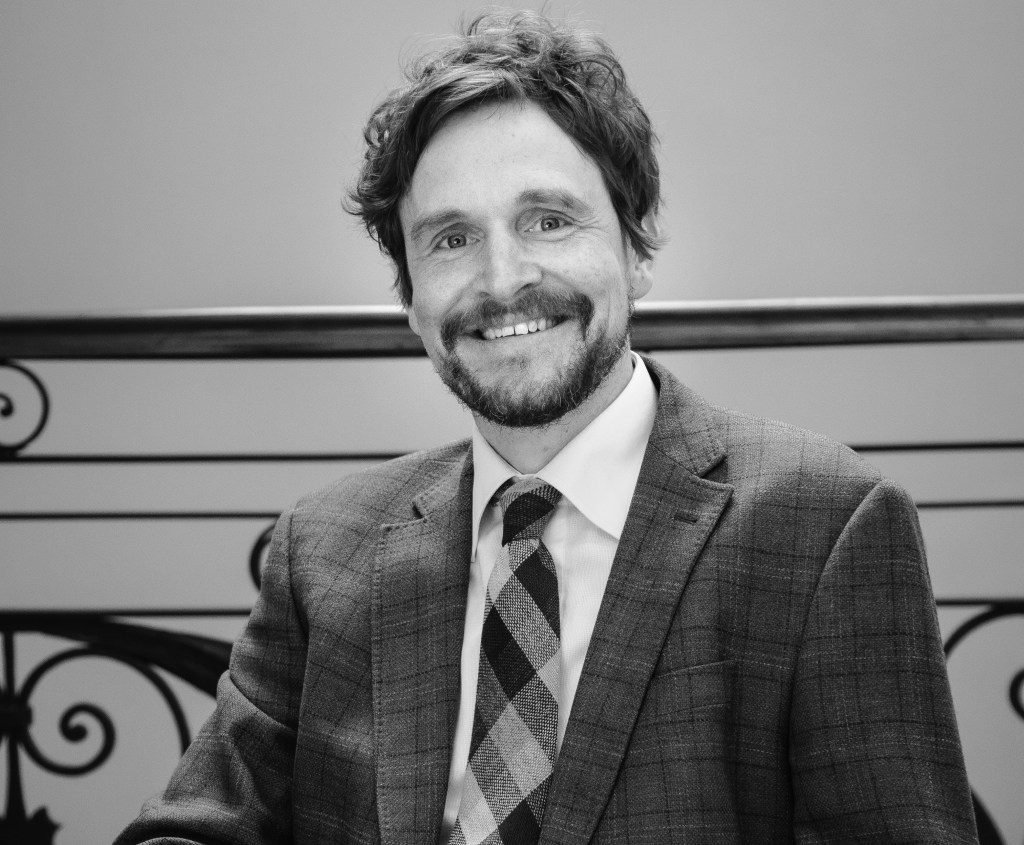
Professor Michael Driessen gives insight into the new Master’s program in International Affairs and discusses what sets it apart from other programs around the world.
Community Spotlight
By Kayla Muller / Matthew Staff || Edited by Michaela Salzman
Launching in Fall 2024, the M.A. in International Affairs at John Cabot will be pioneered by Professor Michael Driessen. Professor Driessen attained his doctorate at Notre Dame and has published numerous works, most recently being The Global Politics of Interreligious Dialogue: Religious Change, Citizenship and Solidarity in the Middle East.
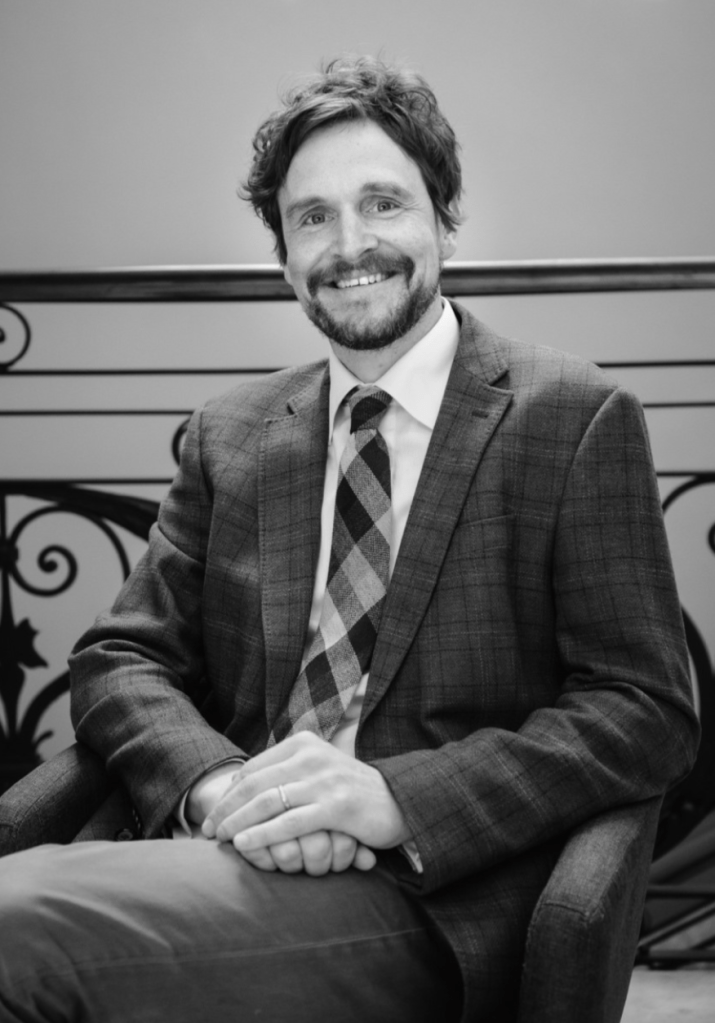
I had the pleasure of interviewing Professor Driessen on taking on his new role as Director of the M.A. in International Affairs and what he hopes to achieve with the launch of the program.
You attended Notre Dame and got your doctorate; Can you tell us a bit more about your academic background and what led you to take on the role of director for this new master’s program here at John Cabot University?
I come from a liberal arts background, and I did an interdisciplinary degree at the University of Portland, a small liberal arts university on the West Coast. I took a mix of math, fine arts, art history, and philosophy, and although I didn’t take any political science courses, I was always interested in questions of peace. I got my master’s at Johns Hopkins SAIS in Bologna, where my studies were focused on conflict resolution, international relations, and peace in the early 2000s. This was right in the aftermath of 9/11 and there were a lot of questions about the role that religion was playing in international peace. After that, I got my doctorate at the University of Notre Dame, which is a university with a long tradition of thinking about religion and politics. A job opened up at John Cabot and I had wanted to go back to Italy, so I grabbed it. My background has always been shaped by questions about policy making, international relations, peace, and conflict resolution, particularly in the Mediterranean region, and this seemed to be a good fit for what we were trying to build in our master’s program.
What is your overarching vision for the program, and what goals or objectives do you hope to achieve with its launch?
The program is policy-oriented and focused on offering skills for students to begin careers in the world of international affairs. The goal is to provide the necessary skills to people who aspire to work in international governmental and non-governmental organizations, or in the fields of diplomacy, human rights, or international law. As a liberal arts university, the seminar-style small classrooms involve a lot of student-scholar interaction, which will create an interesting environment to be thinking about the big questions in global politics: the war in Ukraine, the conflict in the Middle East, or where the US is going in its relationship with China. We want students to have the training, expertise, and the theoretical breadth to respond to these kinds of questions. We also want to give students opportunities to get their first foot onto their career path, and we’ll be engaging with the city of Rome: we want to offer students the possibility to get involved in the rich international environment in the city, and maybe even start their first job or internship here.
How would a student benefit from getting their master’s in International Affairs at John Cabot, and what makes this program different than other institutions?
I think that John Cabot will have the first policy-oriented liberal arts M.A. program in International Affairs in Rome. Every educational culture has its own personality, and one of the things that makes John Cabot special is our international diversity and multiculturalism. Rome also has its own specific personality in terms of the networks and organizations that are present—for example, we’re in a place where it’s interesting to be discussing topics like food security because of the presence of the UN and other food programs here; but also, international diplomacy in the Mediterranean, Europe, and Middle East in general due to the concentration of embassies here. John Cabot is also unique because of our nature as an American liberal arts university within Rome. The thickness of international diversity that you have in a place like John Cabot will be a strength as well. We want to be a strong MA program like all MA programs, but there are certainly some things that make us different and offer us the chance to be a really interesting program.
In what ways will students be able to enhance their experience while partaking in the program, such as research opportunities or internships?
As part of the program, all students need to take a research assistantship or an internship, and we are dedicated to helping students with that. John Cabot just launched a new Center for Graduate Studies, which is designed to be a home for the evolving development of several different master’s programs, and will be led by Antonella Salvatore, the head of the Career Services here at John Cabot. One aspect of the Center for Graduate Studies is that it’s being built to help students find career opportunities and internships. We do this well at John Cabot: we are a small university that has outsized career services possibilities. We’re looking to reproduce that for the International Affairs MA program, and this new center will provide quite a bit of help. I think it’s also going to provide all sorts of possibilities for students in terms of networking opportunities and access to certain types of internships and job placements, which is certainly an important pillar of our program.
How do you plan to stay current with developments and advancements in the global political landscape?
I really believe in the scholar-teacher-practitioner model, particularly when it comes to international affairs. International affairs has a tradition of faculty who not only have a foot in teaching but in policy environments as well. A good international affairs program mixes scholars and practitioners who are actively engaged in world politics, and we have that already at John Cabot; some faculty are more research-focused and some more policy-focused. For my part, I’ll also continue to bring forward my research agenda. I think this creates opportunities for students, and also makes teaching more interesting and exciting.
Right now, I’m working on a long run project on interreligious dialogue in the Mediterranean which includes a policy initiative with the Italian Ministry of Foreign Affairs on Inclusive Citizenship and Religious Freedom in the Euro-MENA region. I will remain involved in that and hopefully there will be opportunities for students in our program to interact with some of the policymakers and religious actors participating in the initiative. In general, we have a very active faculty in the department, with a high level of research and engagement in international politics. I think this will contribute to a dynamic and engaging atmosphere both for the students in the program and for our wider neighborhood. We want to be a place where the more interesting conversations on international politics are happening in Rome.
Finally, what advice would you give to students who are considering pursuing a career in academia or your particular field of study?
Something I always try to encourage students to do is engage in public service. International Affairs remains a field characterized by public service—it’s a practice, like Medicine, in that sense. Do something that brings you into solidarity with others who are suffering. Consider joining the Peace Corps or the European Solidarity Corps, or go work for Amnesty International or the Red Cross. Those kinds of experiences are really important in shaping the way in which you think, as well as your aspirations for what you can do within international affairs. And read widely. That’s my best advice for students: just keep reading.
 thematthewrome.com