
Clustered together on the far east side of Trastevere, as the historic district bends along the tight curve of the Tiber, three exciting contemporary art galleries currently display works by artists whose various approaches are cutting-edge, relevant, and engaging.
Review
By Austin Gaebe / Staff Writer | Edited by Sofia Espinosa
Clustered together on the far east side of Trastevere, as the historic district bends along the tight curve of the Tiber, three exciting contemporary art galleries currently display works by artists whose various approaches are cutting-edge, relevant, and engaging. They are tucked away in spaces containing remnants of their respective histories, an aspect of life in Rome that many local and international artists investigate through their ongoing projects and work. In so doing, contemporary artists exhibiting in Roman gallery spaces enter into a dialogue with the past through their practices, frequently arriving at revelatory conclusions or raising original and compelling questions. These three galleries are merely a sampling of all the Roman contemporary art scene offers. Still, their diverse curatorial approaches may inspire visitors to study, interrogate, or break free from the weight of history in the Eternal City.
You will encounter a rather nondescript chapel-like structure as you turn the corner of Via dei Salumi and Via dei Vascellari. Upon entering the space, visitors enter a stunning area covered in exposed brick walls that stand beautifully dilapidated. Sant’Andrea de Scaphis is unconventional as an exhibition space for contemporary art in nearly every way. In breaking with the “white cube” aesthetic that came to dominate the art world in the late twentieth century, this gallery confronts each visitor with the stories under its roof. The building, originally built as a church in the ninth century, was deconsecrated as a church in 1942. Still, in 2015, the American gallerist Gavin Brown reinvigorated the space as a place for contemporary artists to exhibit their latest works.
Currently, the gallery displays a series of recently completed works by Alex Katz, the 96-year-old American painter most known for his large-scale, colorful renderings of glamorous women in extreme close-ups. In this exhibit, 15 paintings hang “salon style” on the two opposite ends of the chapel, parallel to each other and perpendicular to the majestic altar. Katz pairs sober and dark portraits of women in Calvin Klein lingerie alongside explosions of primary colors and expressive brushstrokes serving as the autumn leaves falling from bare tree branches. While the jarringly joyful manner in which they are painted may run contrary to the sad space, the interaction between the art and the architecture raises interesting questions regarding the emotional weight of color, the human body, and nature within the formerly religious space.

Alex Katz will remain at Sant’Andrea de Scaphis until November 18, 2023.
Upon leaving the hallowed doors of Sant’Andrea de Scaphis, you can walk toward the river for one block and find T293 on Via Ripense, within view of the Tiber. This gallery presents emerging artists in the more traditional “white cube” style. Still, evidence of the building’s former life as a metal workshop remains in the steel runnings along its central room’s curved edges. Opened in 2010, this 400-square-meter space represents an impressive group of international artists from nearly every continent whose work often engages deeply with their cultural origins.
At the moment, visitors can see oil paintings by Erica Mahinay, a young American abstract painter whose practice involves the acts of “reworking” and “layering.” The large-scale paintings in an exhibit titled “Moving From and For” speak to what the gallery calls the “slipperiness of perception and image.” In Rumoring (2023), the eye wanders up and down the canvas, mainly consisting of beige and gray curves that rise and fall at varying heights, interspersed with an occasional orange, green, and blue swath of color. These color interruptions mirror the general shapeliness of the beige and gray background. Still, upon closer examination, one begins to wonder: what exactly does “the background” mean in an abstract painting? Mahinay’s subtle questioning comes to fruition in Always Already (2023), near the back of the gallery space. A collection of bright red splotches cluster in the bottom left-hand corner, overwhelming a curved blueish-gray form in the center. Her paintings could be described as “landscape-adjacent.” While they do not directly represent nature in a recognizable form, their allusions to classic art historical subject matter include flowers, mountains, and even the human body. These are challenging works that must be experienced in person to fully appreciate her careful and highly considered brushwork and quiet use of color.
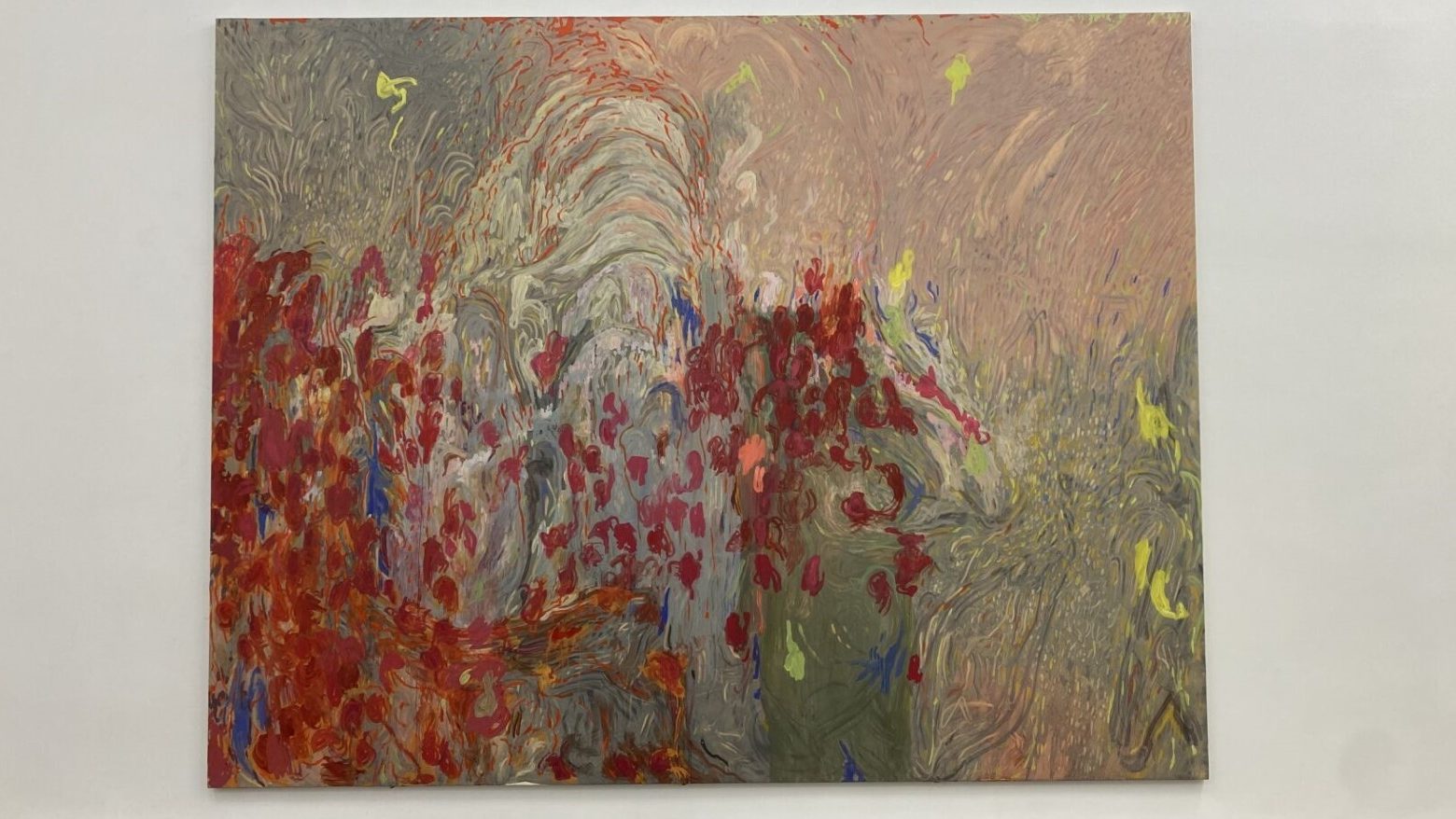

“Moving From and For” will remain at T293 until October 27, 2023.
Finally, if you return to the heart of the neighborhood on Via dei Genovesi, you will find a tiny but efficient gallery space called ADA. This space, originally designed as a place for artists to work, now operates as a commercial gallery representing artists and displaying their work. Today, ADA retains its reputation as a former artist workspace by hosting performances. Despite its small size, This young, up-and-coming gallery in the center of a sixteenth-century block of apartments is worth multiple visits.
Presently, the gallery primarily represents Italian artists, but its current exhibition shows the work of Ukrainian artist Anna Perach. Her practice engages with feminist thinking surrounding the female body, its historical imprints on society, and the role of craft in “craft-ing” female identity. The exhibit, titled “Liminal Being,” features work inspired by anatomically accurate sculptures created for medical study in the seventeenth century. The first work on the floor you will encounter, titled The Hysteric (2023), displays a woman with two mysterious forms latching onto her legs, a reference to the testing that was done to “female hysterics” by Jean-Martin Charcot at the Pitié-Salpêtrière Hospital in Paris in the late nineteenth century. Hanging on the wall is an untitled sculpture incorporating woven materials and wood to call attention to the similarities in texture and appearance to human skin, muscle, and bone. While the exhibit is small, it certainly leaves visitors with new ideas about the relationships between identity, history, and materiality.
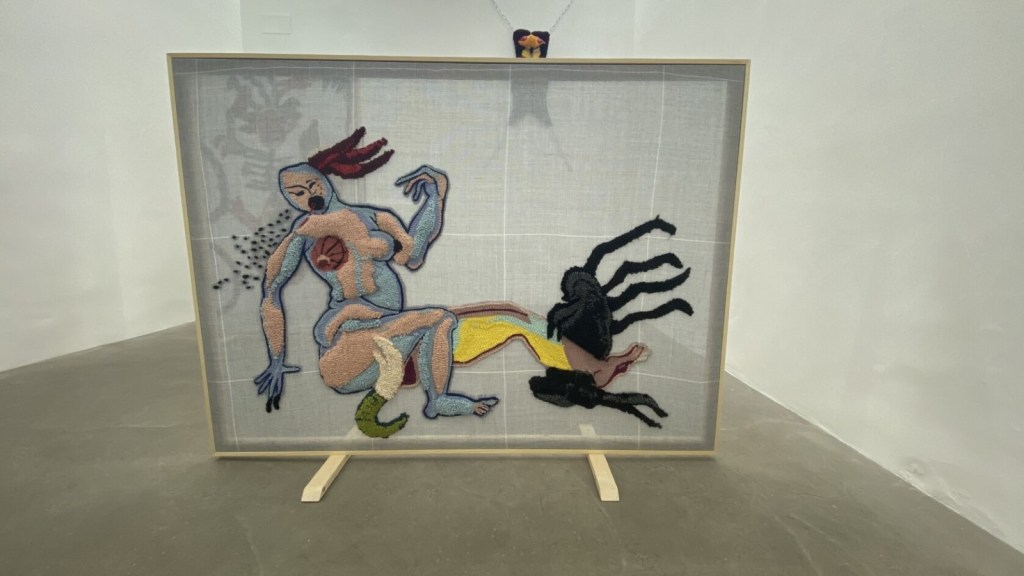

“Liminal Being” will remain at ADA until November 11, 2023.
Address: Via dei Vascellari, 69, 00153 Roma RM
Address: Via Ripense, 6, 00153 Roma RM
Address: Via dei Genovesi, 35, 00153 Roma RM
 thematthewrome.com