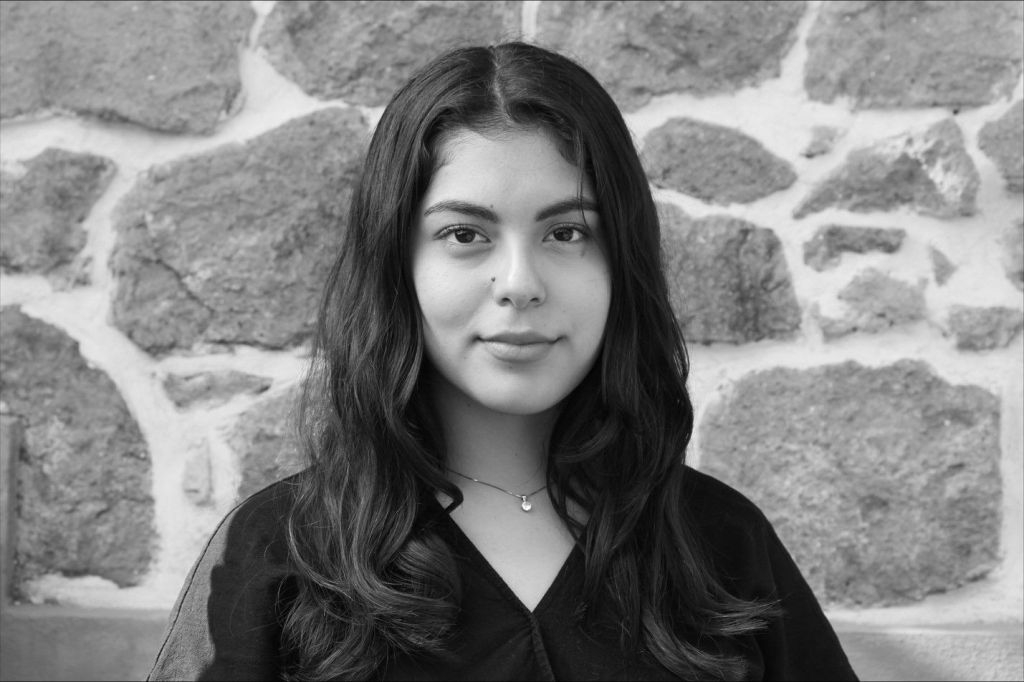
JCU student Valeria Reyes on being a club leader, what it means to be involved, and exploring future aspirations and goals.
Community spotlight
By Kayla Muller / Matthew staff || Edited by Eleonora Prior
Valeria Reyes is a junior, majoring in Psychology with a double minor in Legal Studies and Entrepreneurship for Social Innovation. As a student leader devoted to volunteer work, she’s involved not only in JCU student life but with the local community in Rome. A dedicated and hardworking student leader, Valeria serves as the club leader of the Women’s Leadership Initiative, is a spirited member of the cheerleading team, a research assistant for Professor Merel Keijsers, a compassionate community service leader at the VO.RE.CO center, and an event coordinator for the local organization GenQ that helps gender equality here in Rome.
I had the pleasure of interviewing her about her current projects and aspirations for the future.
First and foremost, you’re incredibly involved in the JCU community— how do you feel your extracurricular activities has helped prepare you for your future professional career development?
The activities that I’m involved in at JCU have helped me develop many skills that will be helpful in the professional environment, particularly through leadership positions. Not only this, but I’ve had the opportunity to strengthen my teamwork skills through sports. In other areas like community service, I’ve realized how important it is to have an impact on the community, and I feel like these skills and experiences can be translated into my professional development. Extracurriculars go further than simply what is on your CV—they’re a good way of growing in several aspects of life and as a person.
What made you choose John Cabot?
First of all, I love traveling and I love learning about new cultures. Coming from Cancun, Mexico, a tourist destination, I’ve been surrounded by people from all over the world, and I’ve realized how different our lives and perspectives are. I wanted to translate that to the classroom experience because it makes it so much richer and you learn so much more; I also wanted to challenge myself by deciding to study abroad, because you have to start your life from zero. It meant making new friends, living alone, and learning a new language, and I wanted that challenge.
You’re working with Professor Keijsers as a research assistant this semester: can you tell us a bit more about it?
We are using methodology and statistics to compare scales and questionnaires used to measure people’s responses and perceptions of the anthropomorphism of robots based on videos that we create. The project is very special because there’s not a lot of literature on the topic. Robots are slowly becoming more and more integrated into our lives, so studying how we react to them is very important. The team is great because we have different students working on it, and everyone brings something new to the table. I love working with Professor Keijsers because I get to expand on things that I learned in class and that I’m interested in. Our next step will be working on the questionnaires, stats, and coding as well.
Can you tell us about the Women’s Leadership Initiative and your position as president?
At the Women’s Leadership Initiative, we bring attention to the challenges that women face today, such as gender discrimination, underrepresentation, and intersectionality. We discuss possible solutions, and if we can, we try to implement them here on campus. Additionally, we focus on the professional development of the members, providing them with the skills and tools to enter the professional environment. We also want to create a community where our members feel safe to share their experiences, thoughts, and opinions. We’ve found that more than just the educational part of WLI, people enjoy that personal experience and learning from and getting inspired by others. As president, I would like to leave a legacy here and make sure that the student body understands the importance of intersectional feminism, gender equality, and the empowerment of women, not only for women but for the development of society in general.
You’re majoring in Psychology with a double minor in Legal Studies and Entrepreneurship for Social Innovation—what inspired you to pursue this, and how has it helped prepare you for your future career aspirations?
First of all, I’m very interested in how the mind works and why we behave the way we do. I enjoy applying psychology in legal fields, such as forensic psychology. I’m also interested in how criminal minds work– for example, criminal cases– and the most important aspect would be how to help victims recover after a crime, so that’s why I chose psychology and legal studies. Having a good understanding of the legal system is very important to help people in the future. As for entrepreneurship, I chose it because I would like to not only help people in a personal, one-on-one way, but I would like to help shape society on a bigger scale; I think entrepreneurship would allow me to apply my humanitarian work to a bigger level.
What are some of your goals or plans after you graduate from JCU?
I want to pursue a master’s degree and a doctorate here in Europe, either in Italy or England. I would like to get into academia and do research in psychology, because, to implement solutions and help society, you need a research base to back up what you’re doing. I would like to come up with new treatments, make sure the current theories are working in psychology, and research how to help patients with different mental health problems or brain diseases. I’m a very big advocate of volunteer work, so I would like to have an association fundraiser or organization. I don’t know what exact field yet, but I’ve been very involved since high school; my dream would be to create my own organization instead of working for someone else.
Are there any professors or role models who have impacted you, either academically or personally, and how have they influenced you?
This past summer session in May and again in the fall, I worked as an orientation leader, and Veronica Di Marzo, the orientation coordinator, is very inspiring. Although I didn’t get to share too many personal interactions with her, I got to see the way she worked. As you can imagine, the orientation process is very stressful, and we had the biggest number of students coming in this semester. You have more than a thousand people coming in one week, and she’s organizing 30 orientation leaders—it’s a lot of people. Between flights and buses coming in, campus tours, navigation, workshops, and more, everything is happening at the same time. It’s a very stressful position but she never negatively answers you– she’s always there asking: “Are you okay, do you need anything, do you need a break.” To me, she’s the perfect example of what a leader is. A boss will always tell you what to do, but a leader helps you grow and helps the team be better.
What would you say to students who are interested in becoming more involved in the JCU community?
I would say it’s never too late to start and absolutely do so. I have a lot of friends who are juniors and seniors, and they don’t know about the great opportunities that JCU offers. I would say if you’re curious about something, ask your friends! Don’t be afraid to ask people how they join. I’ve realized that most of my friends want to join, but don’t know how to. Don’t be scared to ask, just go for it– you get to meet a lot of interesting people, and you get to know your professors more as well. It’s a great opportunity to develop skills and explore your interests outside of the classroom.
Finally, is there anything else you’d like to share that has helped shape your academic journey, such as hobbies, work, volunteering, etc.?
I would say that volunteering has been a big part of my life, and it helped me choose my major. To me, seeing the inequalities or other problems that minorities face has helped me realize how important it is not only to help them, but to realize our own advantages and how we can use them to help others and create a more just world where everyone can have the same opportunities. I would also say that people often think of volunteering as something that you do at school or something that you do for free, but it has a big impact on our society. Right now, I’m working with an association called GenQ which helps gender equality here in Rome. We’re creating policies that we then take to the Comune Roma, which is the state government here. I would say that volunteer work has a significant impact, and you can apply it to your academic and professional development.
 thematthewrome.com